



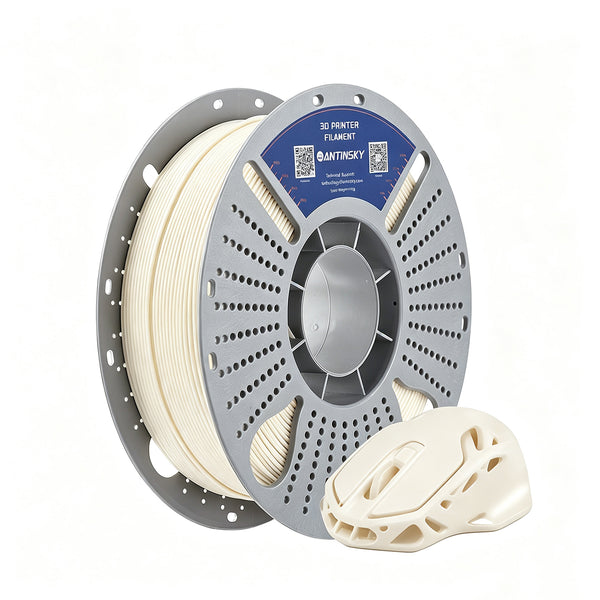
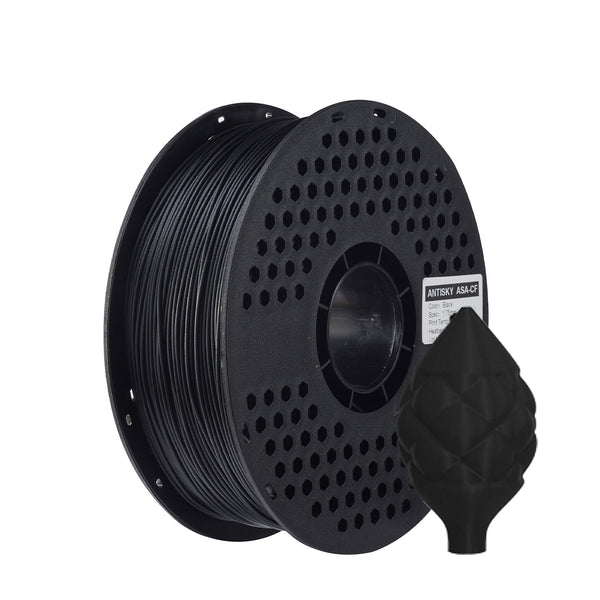
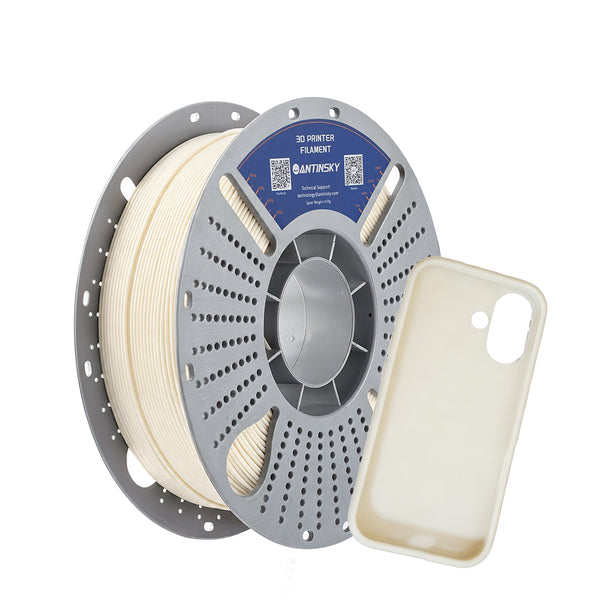
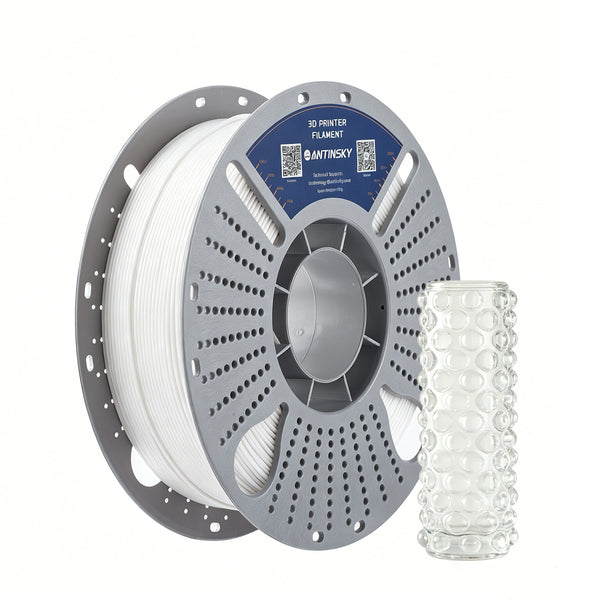
















If you print functional parts that live outdoors or near heat, you will eventually face the ABS-versus-ASA decision. Both are styrenic thermoplastics with similar strength, similar print temperatures, and similar enclosure requirements. The difference that decides most projects comes down to one property: UV and weather resistance.
This guide compares the two head to head — mechanical properties, thermal limits, print settings, warping behavior, fumes, and cost — then adds the modified variants (ABS+, ABS-CF, ASA-CF, flame-retardant grades) that change the answer for specific applications.
The Short Answer
- Outdoor, sunlight, weather exposure: use ASA. It is the material designed to replace ABS in exterior applications.
- Indoor functional parts, enclosures, prototypes on a budget: ABS (or ABS+) is usually cheaper and prints slightly easier.
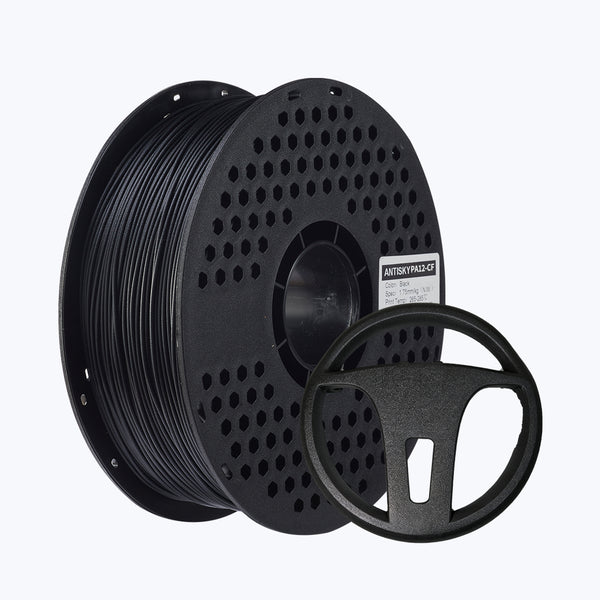
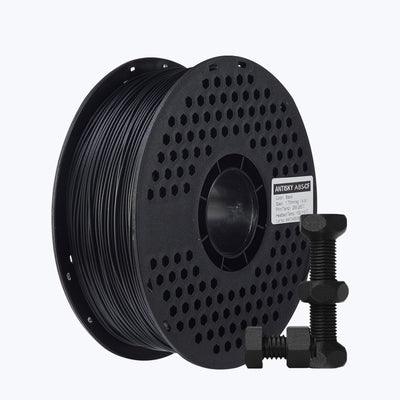
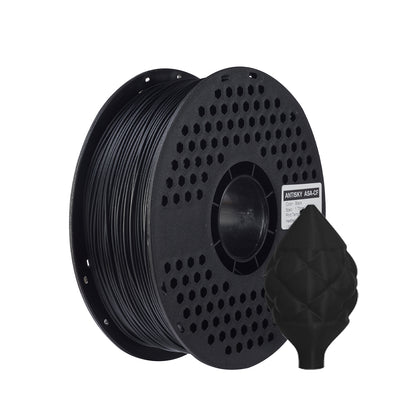
- Stiffness and dimensional stability matters more than toughness: go carbon-fiber filled — ABS-CF or ASA-CF.
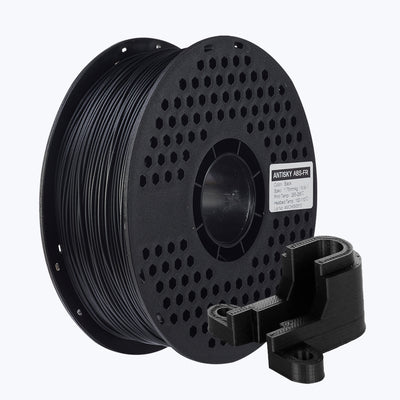
- Fire-safety compliance is required: you need a flame-retardant grade such as ABS-FR, not a generic ABS.
Head-to-Head Comparison
| Property | ABS | ASA |
|---|---|---|
| Chemistry | Acrylonitrile Butadiene Styrene | Acrylonitrile Styrene Acrylate |
| UV / weather resistance | Poor — yellows and embrittles outdoors | Excellent — the main reason ASA exists |
| Impact strength | High | High (comparable, sometimes slightly lower) |
| Heat resistance (typical) | ~90–105 °C range | ~90–105 °C range, similar |
| Print temperature | 240–260 °C | 240–265 °C |
| Bed temperature | 90–110 °C | 90–110 °C |
| Enclosure | Strongly recommended | Strongly recommended |
| Warping tendency | High | High (slightly better adhesion in practice on many builds) |
| Fumes / odor | Noticeable styrene odor | Still styrenic — ventilation required either way |
| Post-processing | Acetone smoothing / welding | Can be vapor smoothed, less commonly done |
| Relative cost | Lower | Higher |
On paper the two look nearly identical. In service they diverge sharply, because the butadiene phase in ABS — the component that gives it impact toughness — contains double bonds that UV light attacks. Over months of sunlight, ABS loses color and impact strength. ASA replaces that butadiene phase with an acrylate rubber that has no such weak points, so it holds up for years.
Print Settings
| Setting | ABS / ABS+ | ASA / ASA-CF |
|---|---|---|
| Nozzle temperature | 240–260 °C | 250–265 °C |
| Bed temperature | 100–110 °C | 100–110 °C |
| Chamber temperature | 40–60 °C helps significantly | 40–60 °C helps significantly |
| Part cooling fan | Off or very low (0–20%) | Off or very low |
| Print speed | 40–80 mm/s | 40–70 mm/s |
| First layer | Slow, 0.2 mm, bed adhesion aid | Slow, 0.2 mm, adhesion aid |
Both materials shrink as they cool, which is why an enclosure is nearly mandatory for anything larger than a small part. A steady warm chamber slows cooling and dramatically reduces the lifting and splitting that gives ABS its difficult reputation.
Practical anti-warping checklist:
- Enclose the printer or enclose the part with a draft shield.
- Turn off part cooling for the first layers, then run minimal or no fan throughout.
- Add a brim for tall or long parts.
- Round sharp corners in the model where possible — sharp corners concentrate shrinkage stress.
- Keep the chamber stable; avoid opening the door mid-print.
Where the Difference Actually Shows Up
| Application | Recommended material |
|---|---|
| Indoor brackets, mounts, jigs | ABS / ABS+ (ABS+ Filament) |
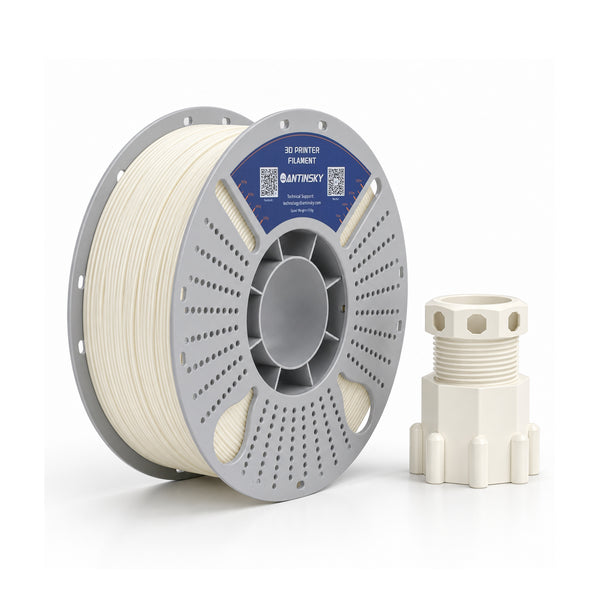
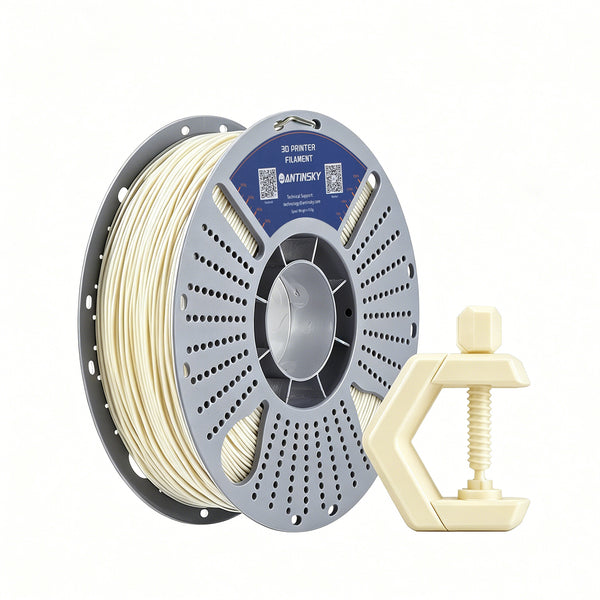
| Outdoor signage, garden fixtures, exterior housings | ASA Filament |
| Car interior/exterior trim, mirror mounts | ASA (heat + UV) |
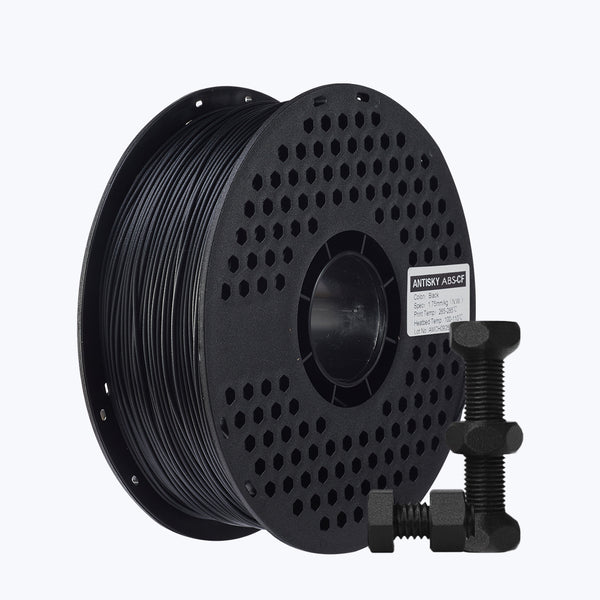
| Drone frames, structural brackets | ABS-CF or ASA-CF |
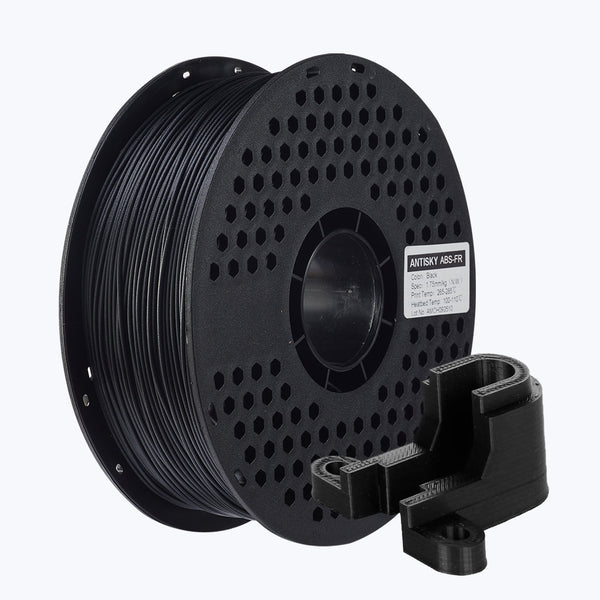
| Parts that must pass fire-safety testing | ABS-FR (flame-retardant grade) |
| Prototypes and fit checks before committing to ASA | ABS / ABS+ |
The pattern is simple: indoors = ABS is fine, outdoors = ASA is not optional. A part that lasts five years in a workshop may look bleached and brittle after one summer on a balcony if it was printed in ABS.
Carbon-Fiber Variants Change the Trade-Off
Adding chopped carbon fiber to either base polymer raises stiffness and reduces warping, because the fibers constrain shrinkage. Two consequences matter:
- Stiffer, more dimensionally stable parts — good for brackets, jigs, and anything that must hold shape under load.
- More abrasive filament — you need a hardened steel or comparable wear-resistant nozzle, and layer adhesion is slightly lower than the unfilled polymer.
If your part both sits outdoors and needs rigidity, ASA-CF is the logical pick; if it is indoors and needs stiffness, ABS-CF is the cheaper equivalent.
Fumes and Safety
Both ABS and ASA emit volatile organic compounds while printing, and styrene-based fumes are the reason these materials are not recommended for bedrooms or unventilated rooms.
- Ventilate the room or exhaust the enclosure to the outside.
- Use a carbon and HEPA filter on the enclosure for odor and ultrafine particle reduction.
- Do not print styrenics near food preparation or sleeping areas.
- Post-processing with acetone (vapor smoothing) requires its own ventilation and gloves — acetone is flammable and a strong irritant.
Troubleshooting
| Problem | Cause | Fix |
|---|---|---|
| Corners lifting off the bed | Draft, cold chamber, insufficient bed temp | Enclose, raise bed temp, add brim |
| Layer splitting along the Z axis | Low chamber temp, too much cooling | Raise chamber temperature; reduce fan to 0–20% |
| Weak layer adhesion | Nozzle too cold or printing too fast | Raise nozzle temp 5–10 °C; slow down |
| Stringing | Wet filament or excessive temperature | Dry the filament; tune retraction |
| Rough surface on CF grades | Carbon fibers abrading a brass nozzle | Switch to a hardened steel nozzle |
| Part brittle after months outdoors | Printed in ABS instead of ASA | Reprint in ASA for UV stability |
FAQ
Is ASA just "better ABS"?
For outdoor use, effectively yes — that is exactly what it was developed for. For purely indoor parts, ABS is usually cheaper and marginally easier to print, so calling ASA universally "better" would be an overstatement.
Can I print ASA without an enclosure?
Small parts sometimes succeed, but any part with significant length or flat area will likely warp or split. An enclosure is the single biggest factor in ASA/ABS reliability.
Does ASA need drying before printing?
ASA absorbs little moisture compared to nylon, but filament that has been open in humid air for weeks benefits from drying. Stringing and popping sounds are the usual signs.
Which is stronger, ABS or ASA?
Their short-term mechanical properties are close. The meaningful difference appears over time: ASA retains its color and impact resistance outdoors while ABS degrades.
Can ABS and ASA be glued or welded together?
Yes. Both are soluble in acetone, so acetone-based adhesives and solvent welding work for joining parts of either material, including mixed ABS-to-ASA joints.
Do I need a hardened nozzle for ABS-CF or ASA-CF?
Yes. The carbon fiber content is abrasive and will rapidly wear a brass nozzle, changing the extrusion diameter and ruining print consistency. Use hardened steel or a comparable wear-resistant nozzle.
Which Should You Buy?
Decide based on where the part will live, not on which filament is more expensive:
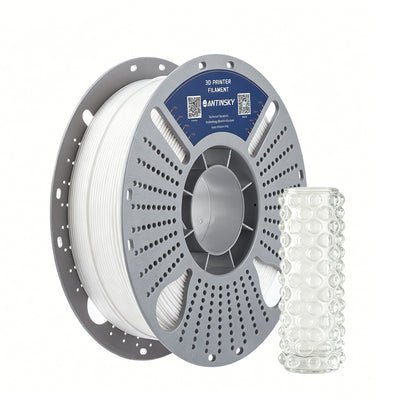
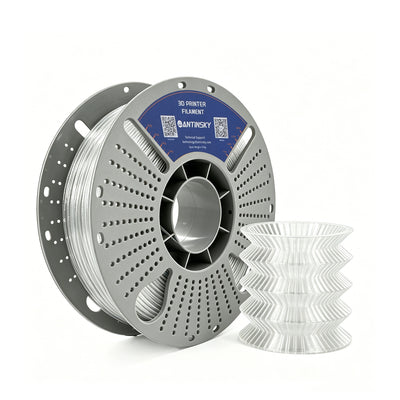
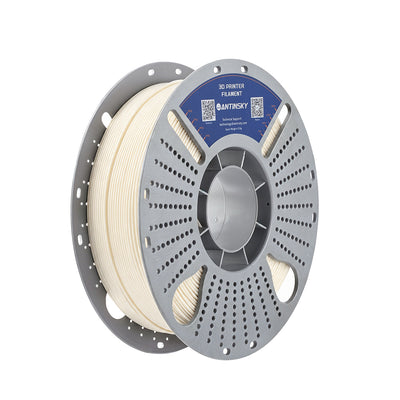
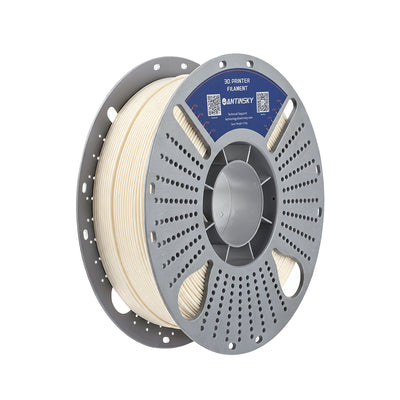
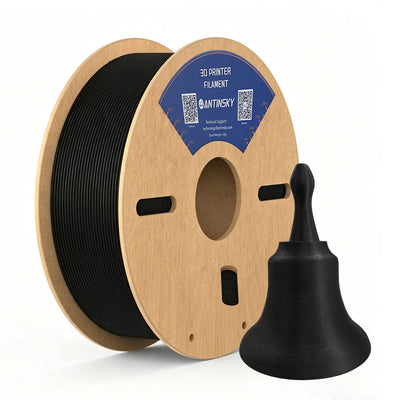
- Indoors and budget-conscious: ANTINSKY ABS+ 3D Filament — easier printing with strong layer adhesion.
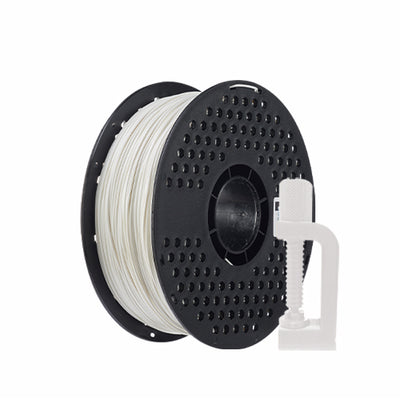
- Outdoors or in sunlight: ANTINSKY ASA 3D Filament — the UV-stable choice.
- Rigid structural parts: ABS-CF or ASA-CF — stiffness plus reduced warping.
- Fire-safety requirements: ABS-FR 3D Filament — flame-retardant formulation for compliant parts.
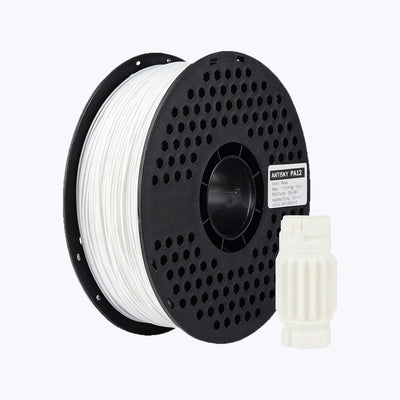
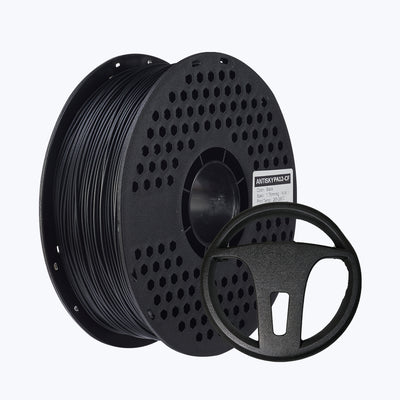
Browse the full ANTINSKY filament range for engineering grades beyond styrenics — PC, PA12, PETG-CF, PPS-CF, and PPA-CF — and match the material to the actual service conditions of your part rather than to habit.