























ABS: The Filament That Rewards Preparation
ABS built the desktop 3D printing hobby, and it still has no real replacement for parts that must survive heat, solvents and mechanical load. It is also the filament people abandon fastest — almost always for the same two reasons: the part warps off the bed, and the printer is not enclosed.
Neither problem is difficult to solve. ABS is less forgiving than PLA, but once the environment is right, it prints reliably and produces parts that PLA simply cannot match. This guide covers settings, warping, fumes, and when an ABS blend is the smarter choice.
What ABS Is Good At (and Where It Struggles)
| Property | ABS | Compared with PLA |
|---|---|---|
| Heat resistance | ~100 °C glass transition | Far better — PLA softens near 60 °C |
| Impact strength | High, tough rather than stiff | Much better — PLA is brittle |
| Solvent weldability | Acetone, and vapor smoothing | PLA cannot be smoothed or welded this way |
| UV / outdoor life | Moderate (ASA is better) | Poor |
| Print difficulty | Needs enclosure and stable ambient temperature | Easy |
| Fumes | Noticeable smell, VOC emissions | Minimal |
Choose ABS for functional parts, enclosures, automotive trim, jigs and fixtures, parts exposed to heat, and anything you want to glue or vapor-smooth with acetone.
You Need an Enclosure (This Is the Real Answer)
Every ABS warping problem is a thermal problem. ABS shrinks roughly 0.8 % as it cools, and it shrinks unevenly if the outside of the part cools faster than the inside. A draft of air, an open window, or an air-conditioned room is enough to lift a corner off the bed.
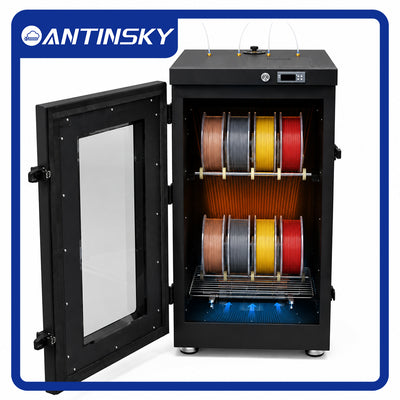
An enclosure puts the whole print — bed, part and nozzle — inside one stable air mass. It is the single highest-impact upgrade for ABS, and it solves most warping without any slicer changes. Practical targets:
- Ambient temperature inside the enclosure: 40–50 °C. This is what prevents warping.
- No drafts at all. Seal cable openings and keep the enclosure closed for the whole print, including cooldown (open it gradually, not immediately).
- Large, tall or thin parts need this most. A small solid block will often print fine without an enclosure; a 200 mm tall box will not.
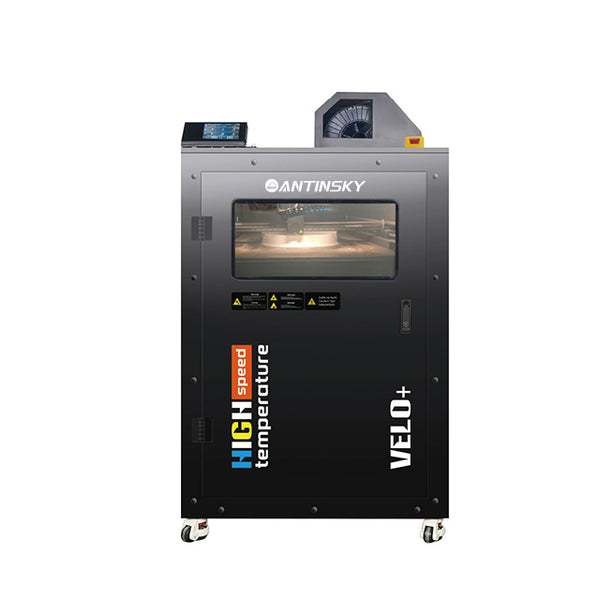
An actively heated chamber is even better — printers such as the ANTINSKY PEEK-300 hold a 120 °C chamber for high-temperature materials, and the same principle (stable, warm air) is what makes ABS predictable at a smaller scale.
ABS Print Settings (Starting Points)
| Setting | Value | Notes |
|---|---|---|
| Nozzle temperature | 240–260 °C | Start 250 °C. Higher = stronger layer bonding |
| Bed temperature | 95–110 °C | 100 °C is the standard starting point |
| Chamber / ambient | 40–50 °C | Non-negotiable for large parts |
| Print speed | 40–60 mm/s | Slower first layer: 15–20 mm/s |
| Fan | 0–20 % | Off, or barely on. Fan causes warping |
| Layer height | 0.2 mm | Thicker layers (0.24–0.28) reduce warp on large parts |
| Infill | 20–30 % | Rectilinear or gyroid |
| Retraction | 0.8–2 mm | Direct vs Bowden |
| Brim | 5–10 mm | Use a brim on anything with corners |
Bed adhesion: what actually works
In order of effectiveness:
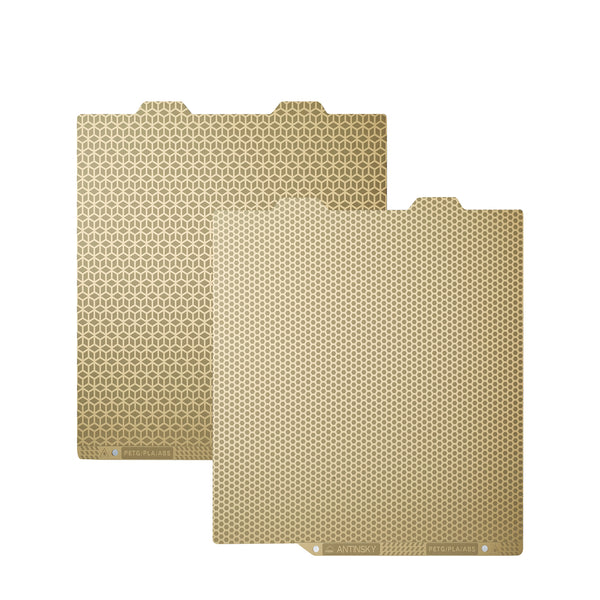
- Textured PEI at 100 °C. Excellent grip while hot, releases as it cools. The best all-round surface for ABS.
- ABS slurry or glue stick on smooth PEI or glass — old-school, messy, and still very effective on hard-to-hold parts.
- Brim. Cheap insurance on any part wider than 50 mm.
- Raft for extreme cases, at the cost of surface finish.
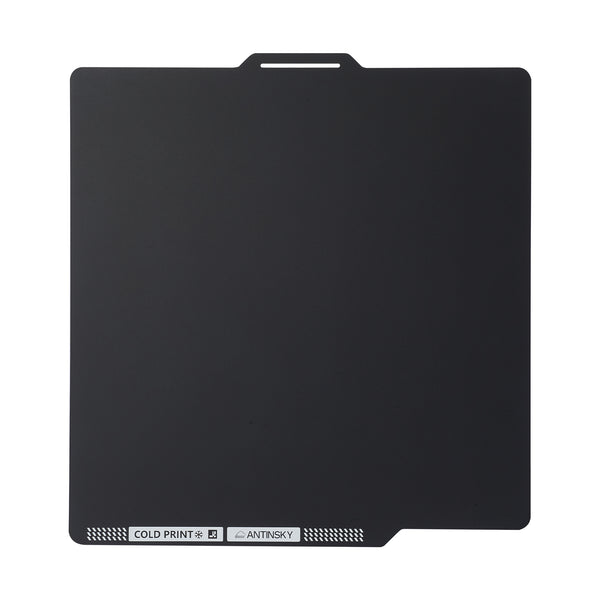
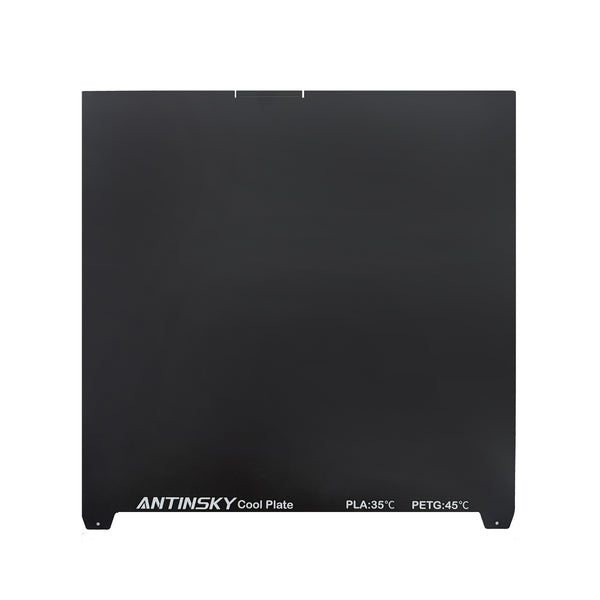
Our Cold PEI Build Plates are available for Bambu Lab, Creality and Snapmaker machines and give the textured, high-grip surface ABS needs.
Fixing Warping: A Checklist
Work through these in order — the first three solve the large majority of cases.
| Cause | Fix |
|---|---|
| Drafts / cold room | Close the enclosure, eliminate airflow, raise ambient to 40–50 °C |
| Bed too cold | Raise to 100–110 °C |
| Fan running | Turn part cooling off entirely for ABS |
| Too much cooling from the part's own geometry | Add a brim, slow the first layer, print a "sacrificial" skirt around tall parts |
| Large flat footprint | Reduce infill, add internal ribs in CAD, or split the model and glue it |
| Fast layers stacking | Slow down, or print two parts at once so each layer has time to stabilize |
| Cheap or wet filament | Dry the spool; buy material with consistent diameter |
Fumes, Safety and Where to Put the Printer
ABS emits styrene and other VOCs while printing. This is real and worth managing rather than dismissing:
- Print in a ventilated room, or vent the enclosure outdoors (a ducted fan plus activated carbon filter works well).
- Do not sleep or work directly beside an unenclosed ABS printer in a small room.
- Keep the enclosure closed and let the filter run for a few minutes after the print ends.
- If fumes are a hard constraint for you, print ASA or PETG instead — see below.
Acetone Vapor Smoothing: ABS's Party Trick
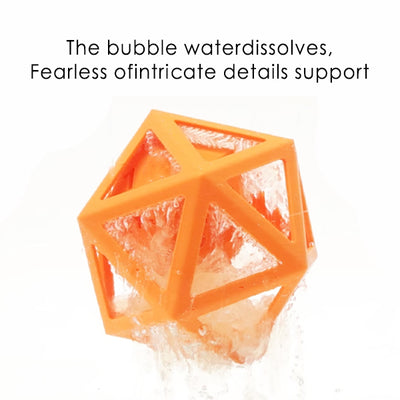
Because ABS dissolves in acetone, you can smooth a printed part to a glossy, injection-molded look, or weld two parts together permanently.
Simple smoothing: suspend the part in a sealed glass jar with a small amount of acetone in the bottom (not touching the part), 20–60 minutes depending on how much smoothing you want. Cold vapor smoothing works at room temperature and is safer than the heated method. Weld with a brush of acetone on both mating surfaces, then clamp.
Work outdoors or with strong ventilation, wear gloves, and never use an open flame or heat source near acetone.
ABS, ABS+ and ABS-CF: Which One to Buy
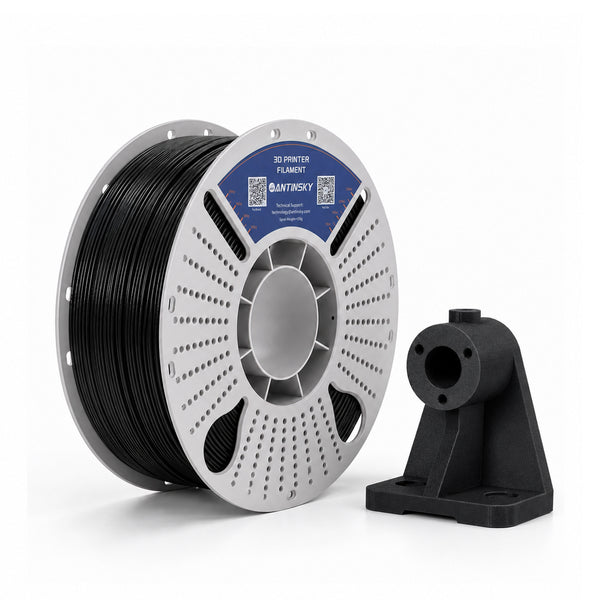
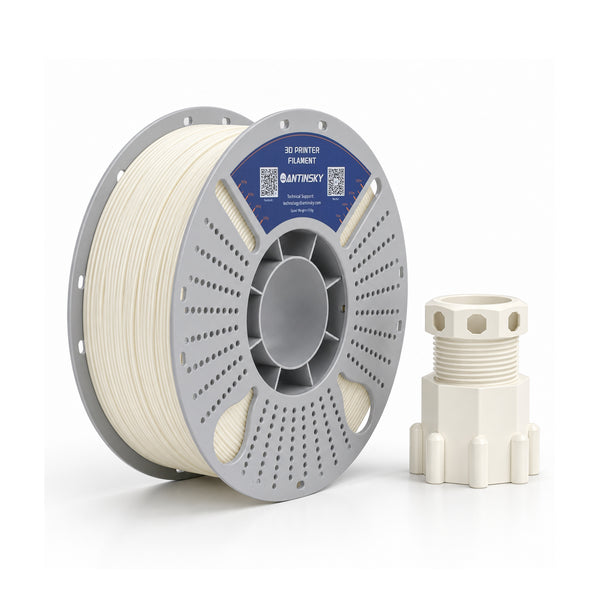
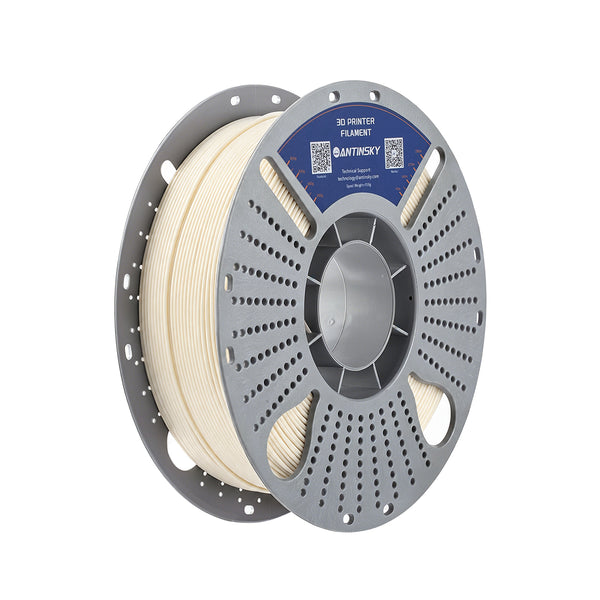
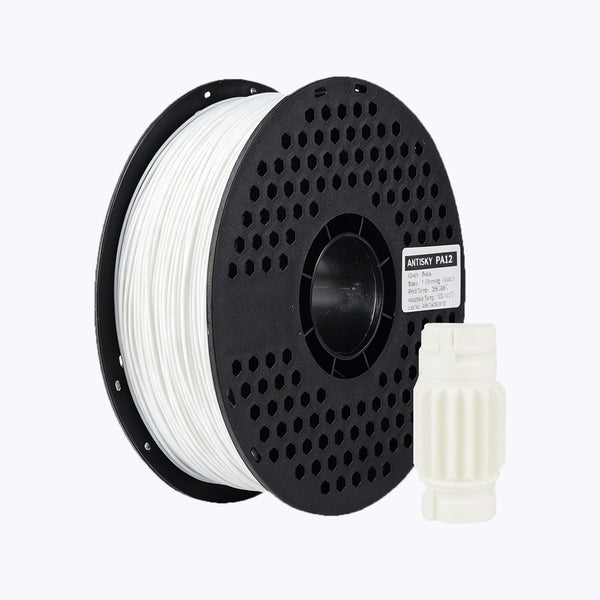
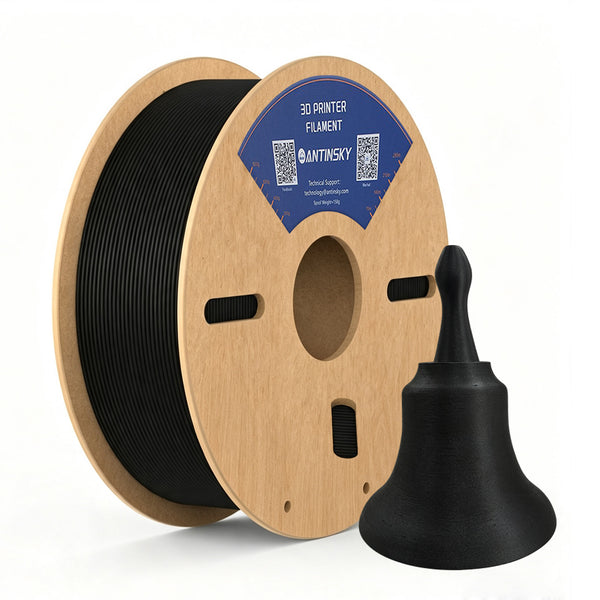
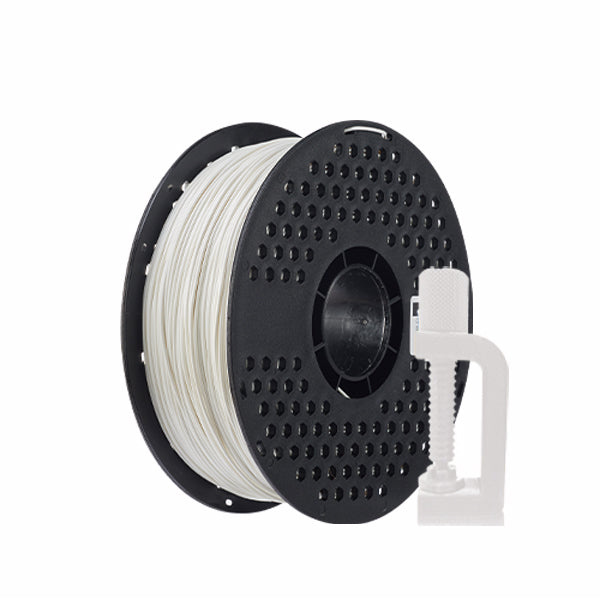
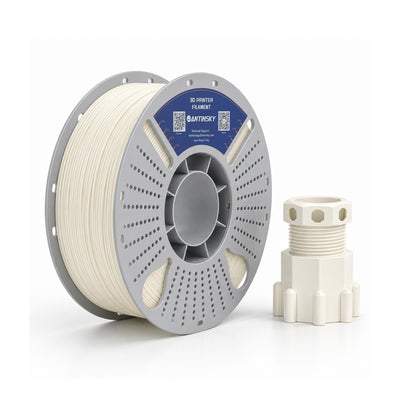
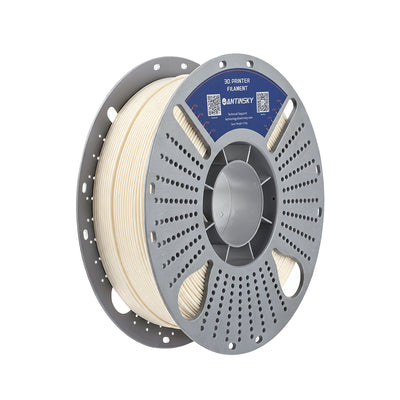
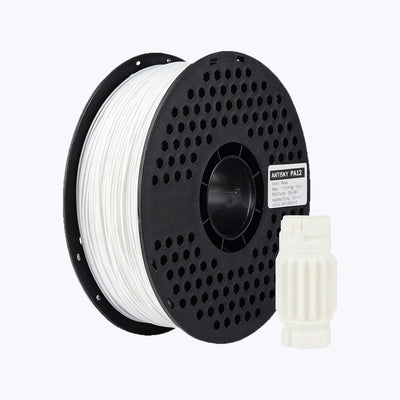
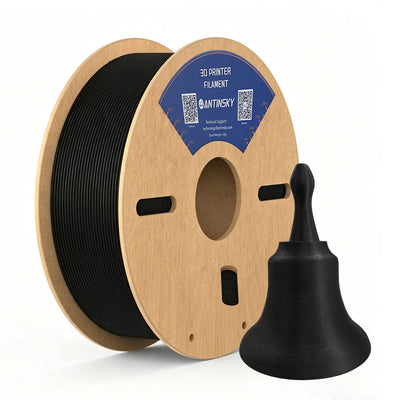
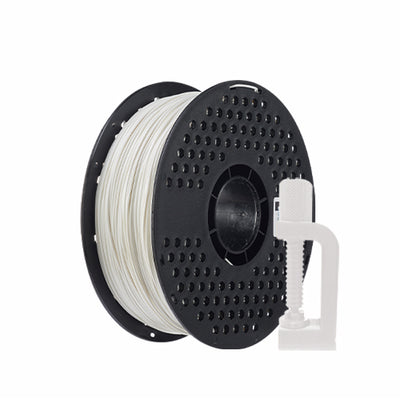
- ABS (standard): the classic. Strong, tough, cheap, acetone-weldable. Requires the full enclosure and ventilation routine. ANTINSKY ABS 1KG
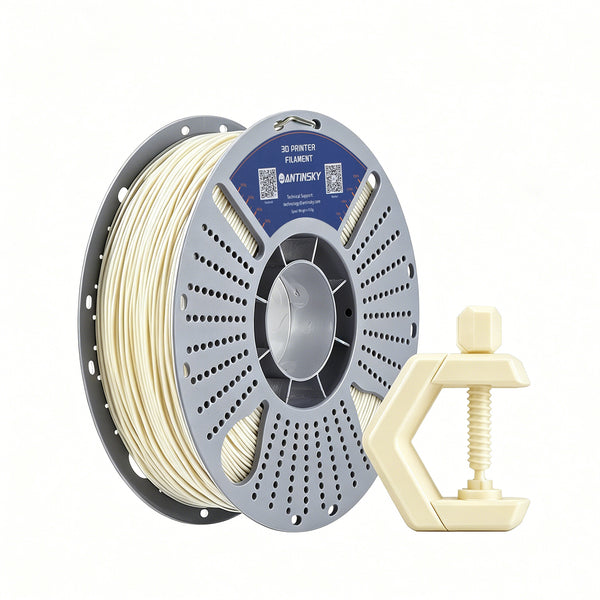
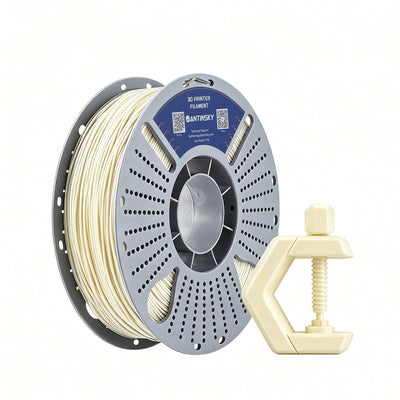
- ABS+: a modified formulation that warps less and adheres better while keeping ABS's strength and heat resistance. If you are new to ABS, start here — it removes most of the pain. ANTINSKY ABS+ 1KG
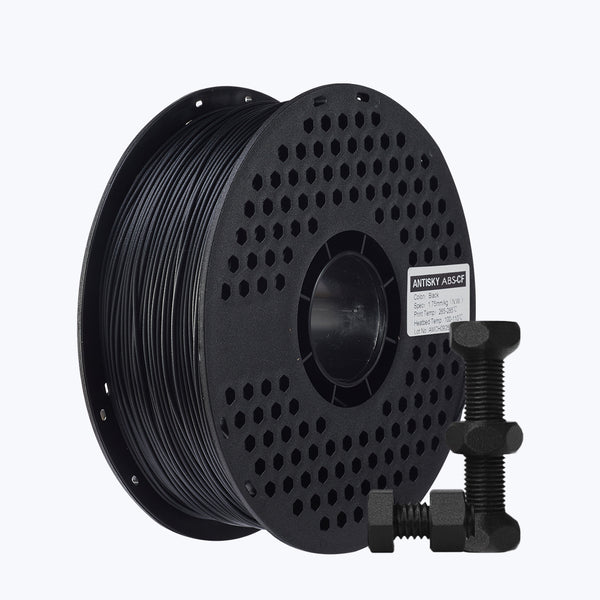
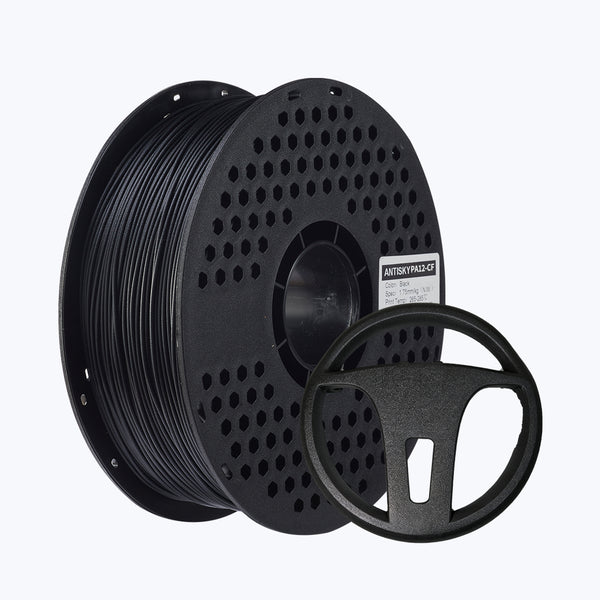
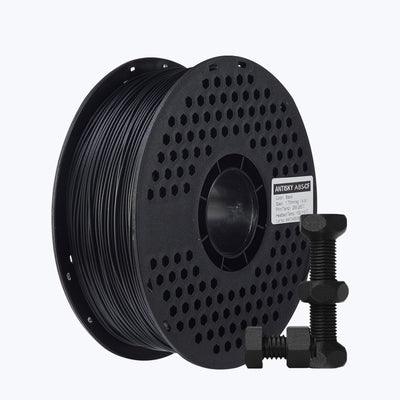
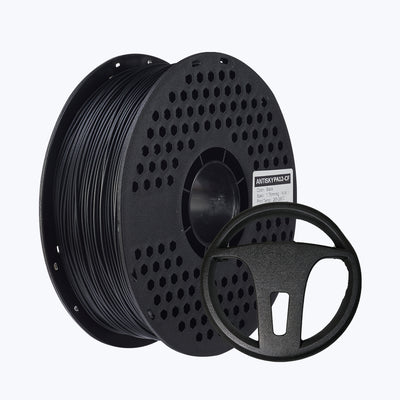
- ABS-CF: carbon-fiber reinforced. Higher stiffness and better dimensional stability, with a matte technical finish. Use a hardened nozzle. Ideal for brackets, jigs and fixtures. ANTINSKY ABS-CF 1KG
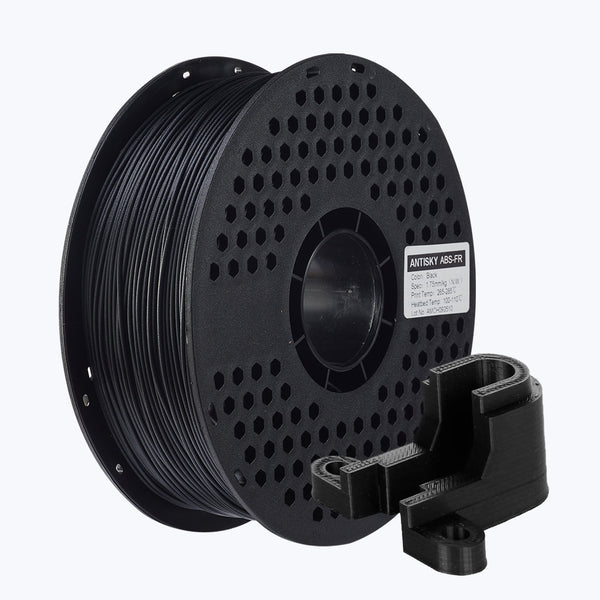
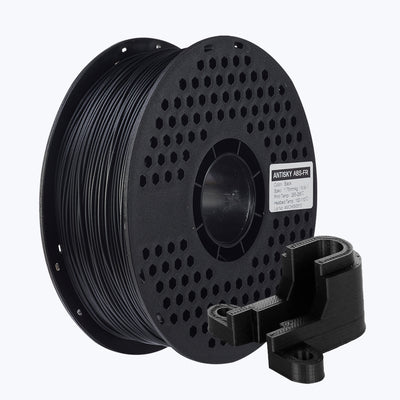
- ABS-FR: flame-retardant, rated UL94 V-0. For electrical housings, industrial enclosures and anything that must meet a flammability requirement. ANTINSKY ABS-FR 1KG
Printing outdoor parts or parts exposed to sunlight and weather? Look at ASA instead — it takes UV without the yellowing and embrittlement ABS develops over time. Pair it with our filament drying guide to keep results consistent.
Frequently Asked Questions
Can I print ABS without an enclosure?
Small parts, sometimes. Large or tall parts, almost never. If you cannot enclose the printer, use ABS+ or switch to PETG and save yourself the frustration.
Why did my ABS part split along a layer?
Layers were too cold when the next one landed, or the part cooled unevenly. Raise nozzle temperature, increase chamber temperature, and slow down.
Is ABS food safe?
No. ABS is not considered food safe, and its layer gaps trap bacteria. Use PETG for food-adjacent applications.
Can ABS be sanded and painted?
Yes, and this is one of its best features. Sand progressively (240 → 400 → 800 grit), use a filler primer for layer lines, or vapor smooth first and then paint.
How do I store ABS?
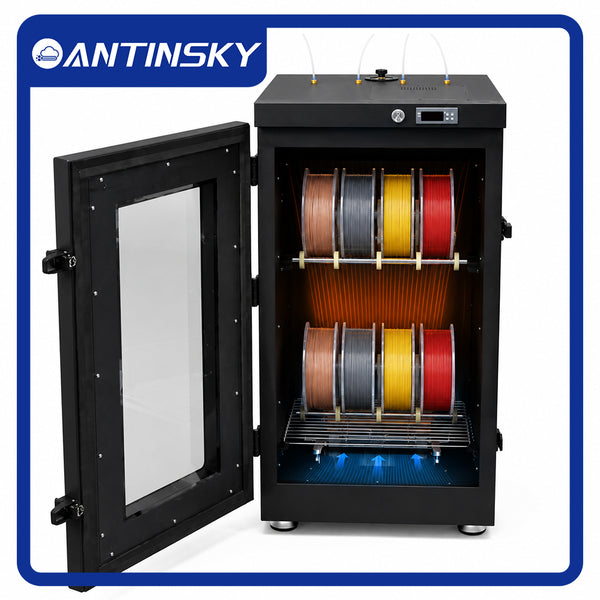
Sealed with desiccant. ABS absorbs less moisture than nylon or TPU, but wet ABS still prints with bubbles and weak layers.
The Short Version
ABS needs three things: an enclosure at 40–50 °C, a bed at 100 °C, and no part cooling fan. Add a brim for anything with corners, vent the fumes, and use ABS+ if you want an easier start. In return you get parts that survive heat, take impact, can be welded with acetone, and can be smoothed to a molded finish.