






















The release film (FEP) is the most overlooked consumable in resin printing — and the one that decides whether your prints succeed. A worn film causes failed supports, layer shifts, and the dreaded "print stuck to the vat." This guide explains what FEP, nFEP and ACF film actually are, how they differ, and how to choose.
What the Release Film Actually Does
In an MSLA/DLP printer, the release film is the transparent membrane at the bottom of the resin vat. Each layer goes through a four-step cycle:
- UV light passes through the film and cures a layer against the build plate
- The build plate lifts, peeling the freshly cured layer off the film
- The plate descends, and the print re-dips for the next layer
- Repeat — thousands of times per print
So the film must be three things at once: optically transparent (to pass UV efficiently), chemically inert (to survive resin solvents), and low-friction with high fatigue life (to peel cleanly thousands of times without clouding or stretching).
Every film on the market is a trade-off between those three. There is no "best film" — only the best film for how you print.
The Three Films Compared
| FEP | nFEP (PFA) | ACF | |
|---|---|---|---|
| Material | Fluorinated ethylene propylene | Perfluoroalkoxy (PFA), i.e. "nano-FEP" | Advanced composite film |
| Release force | Highest of the three | Lower — easier peel | Lowest |
| Surface | Somewhat hazy/cloudy | Clearer | Very smooth, anti-stick |
| UV transmission | Good | Better | Good |
| Lifespan | Shortest | Longer | Longest |
| Typical thickness | 0.1–0.15 mm | 0.1–0.15 mm | 0.2–0.3 mm |
| Price | Lowest | Mid | Highest |
| Best for | Budget printing, low-peel models | General use, fine detail, faster prints | Heavy production, large flat areas, thick parts |
FEP — The Original Standard
FEP film is what most printers ship with. It's cheap, universally available, and works — but it has the highest peel force of the three, which means:
- Longer peel cycles (slower prints)
- More stress on the model, so supports fail first
- It hazes over after a few hundred hours, costing you UV transmission and detail
FEP is still the right answer if you print small, low cross-section parts or you're running a print farm where you replace film often and want to keep consumable cost down.
nFEP (PFA) — The Current Default Upgrade
nFEP is a smoother, more chemically stable fluoropolymer — technically PFA, sold commercially as "nFEP." Its lower surface energy means resin releases more easily, which translates directly into:
- Better support survival — the model isn't yanked off the film each layer
- Faster print times — you can shorten lift and retract
- Clearer optical path — less haze means sharper small features
- Longer service life before noticeable clouding
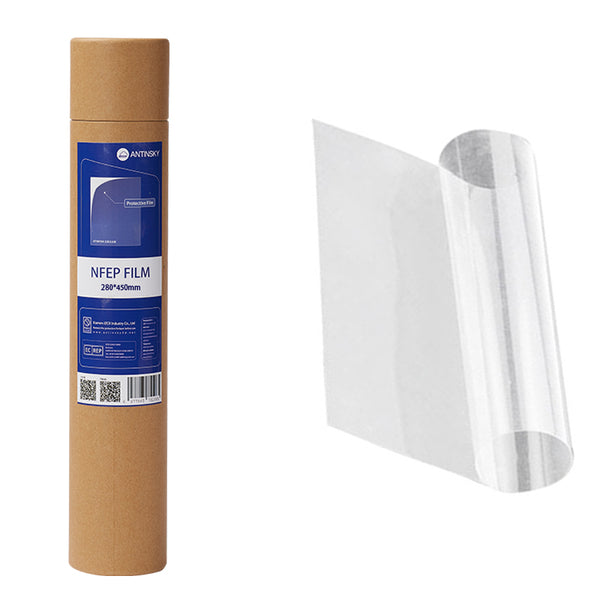
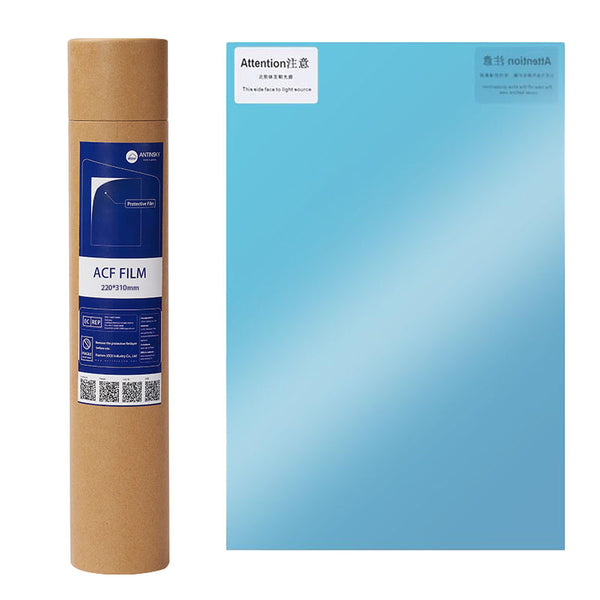
For most hobbyists and small studios, nFEP is the sweet spot. ANTINSKY nFEP film (220 × 310 mm) and the larger 280 × 450 mm PFA release film cover the common MSLA vat sizes, with a 160 × 253 mm option for compact machines.
ACF — The Production Workhorse
ACF (advanced composite film) attacks the peel problem from the other direction: instead of relying purely on surface chemistry, it's a thicker, engineered laminate with an exceptionally low release force. The practical results:
- Massive flat areas release cleanly — the classic failure mode of large prints (the "suction cup" effect) largely disappears
- Dramatically longer life — often several times the working hours of FEP
- Fewer failed prints on bulky, heavy, or high-cross-section models
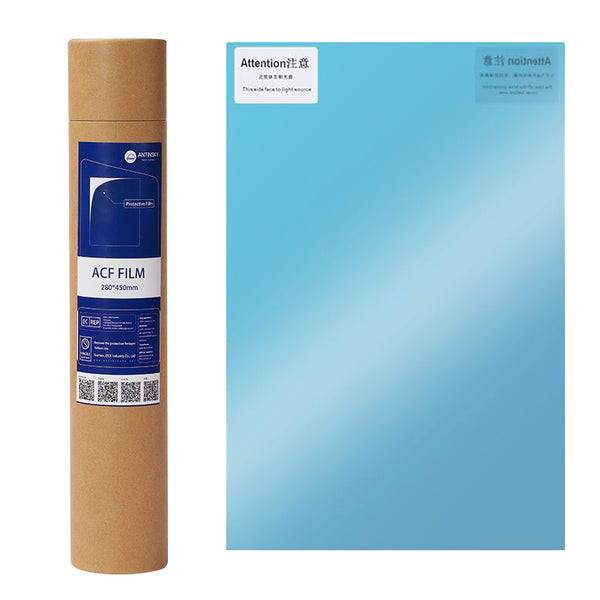
The costs are real too: ACF is the most expensive per sheet, and because it's thicker, some printers need a small exposure/Z-offset adjustment. If you print large, heavy or flat-bottomed parts regularly, ACF pays for itself in saved resin and saved time — see the ANTINSKY ACF Film 280 × 450 mm.
There Is a Fourth Option: HDF
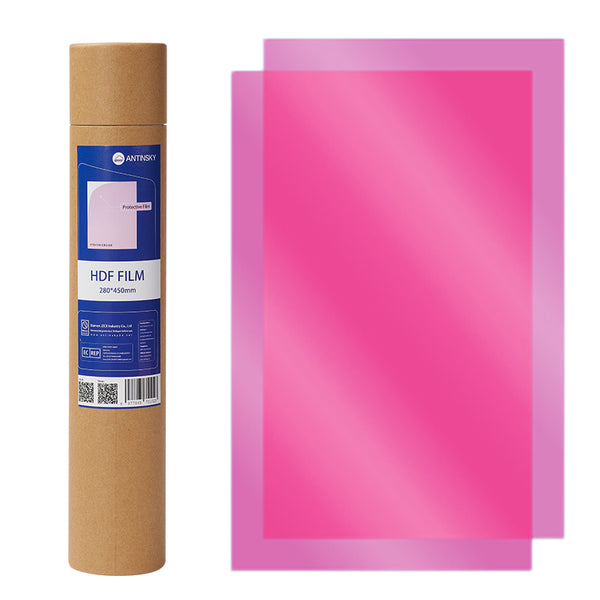
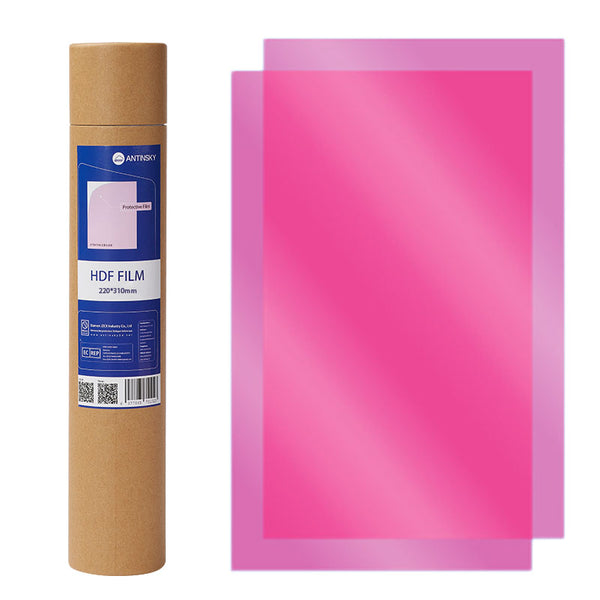
HDF (high-definition film) sits between nFEP and ACF. It emphasizes optical clarity for very fine detail work — jewelry, dental models, miniatures where 20–30 µm features matter — while offering better release than plain FEP. Available in 220 × 310 mm and 280 × 450 mm.
Which Film Should You Buy?
| If you… | Choose |
|---|---|
| Print miniatures, small parts, tight budget | FEP |
| Want a reliable all-round upgrade | nFEP / PFA |
| Print large flat bases, heavy models, or run production | ACF |
| Need maximum fine detail (jewelry, dental) | HDF |
| Print fast and hate failed supports | nFEP or ACF |
Signs It's Time to Replace the Film
Don't wait for a catastrophic failure. Replace the film when you see any of these:
- Cloudiness or white haze — UV is being scattered; detail drops and cure times creep up
- Visible dents, wrinkles or stretch marks — the film is permanently deformed and will never sit flat
- Prints sticking harder than they used to — the classic first symptom of a worn film
- Resin leaking under the film — replace immediately, before it cures onto your LCD
- Any puncture or pinhole — same, replace now
A practical rule of thumb: most users replace film every 1–3 months of regular printing. In production, track it by print hours rather than calendar time.
How to Install Film Correctly
- Drain and clean the vat completely — a single cured speck under the new film will show up in every print.
- Work dust-free. Any hair or dust trapped between film and LCD becomes a permanent artifact.
- Don't over-tension. New film should be flat with a light, even drum feel — not a trampoline.
- Check corners. Tighten diagonally and in stages, like a wheel.
- Re-level and re-test exposure if the film is a different thickness than the old one.
Care Tips That Extend Film Life
- Use a plastic scraper, never metal, to clean the vat.
- Filter resin back into the bottle through a mesh filter — cured fragments are what scratch film.
- Don't let resin sit in the vat in sunlight for days.
- Keep the vat covered when idle.
- Rotate where you print on the plate so wear spreads out.
Frequently Asked Questions
Is nFEP actually different from FEP?
Yes — nFEP is PFA, a different fluoropolymer with lower surface energy and better clarity. "nFEP" is a marketing name, but the material difference is genuine.
Can I put ACF in any printer?
Mechanically yes, but because it's thicker, re-level and possibly increase bottom exposure slightly. Check your printer's vat compatibility first.
Does a clearer film mean shorter cure times?
Generally yes — more UV reaches the resin. If you switch from a hazy FEP to fresh nFEP, expect to trim exposure by 5–15%.
How do I know my film is the right size?
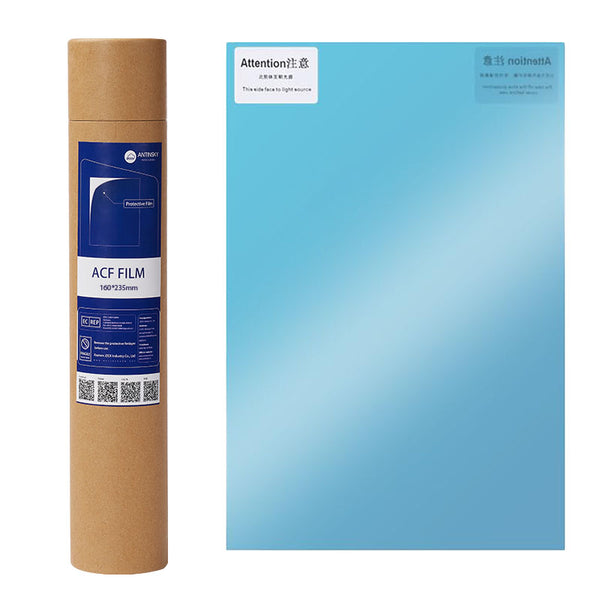
Measure the vat's film area, not the printer model name. Ours come in 160 × 235, 220 × 310 and 280 × 450 mm.
My print has a large flat base and keeps failing. Film or settings?
Usually both. Switch to ACF or nFEP, tilt the model 5–15°, add a hollow with drain holes, and increase lift height.
Can I reuse a film from another printer?
Only if it's uncut and fits flat. A pre-stretched or trimmed film will never seal properly.
Final Thoughts
Release film is a consumable, and treating it like one is the fastest way to improve print reliability. Buy nFEP for everyday printing, keep ACF on hand for big flat parts, and replace the film the moment it clouds or dents — not after a failed 12-hour print.
See all sizes in the ANTINSKY Release Film collection.