






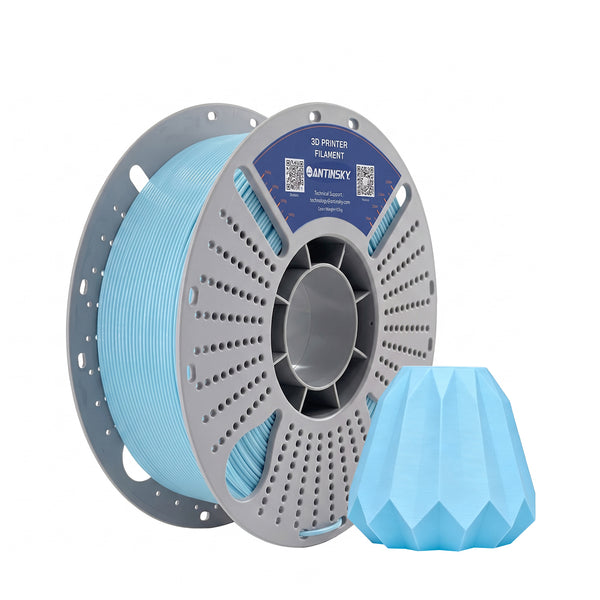
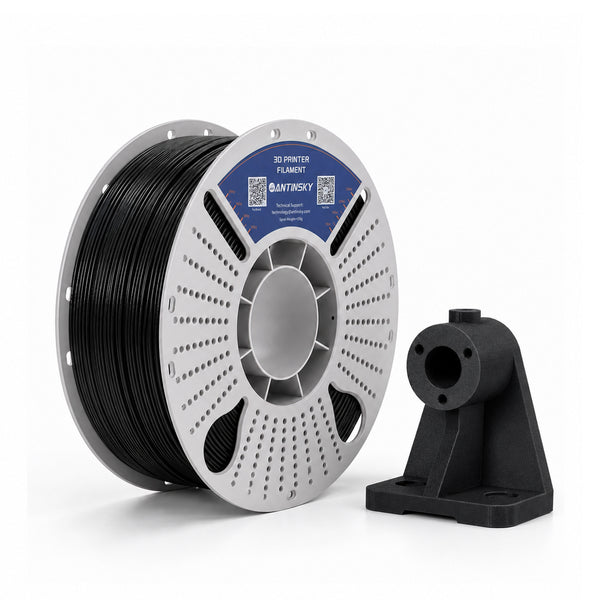
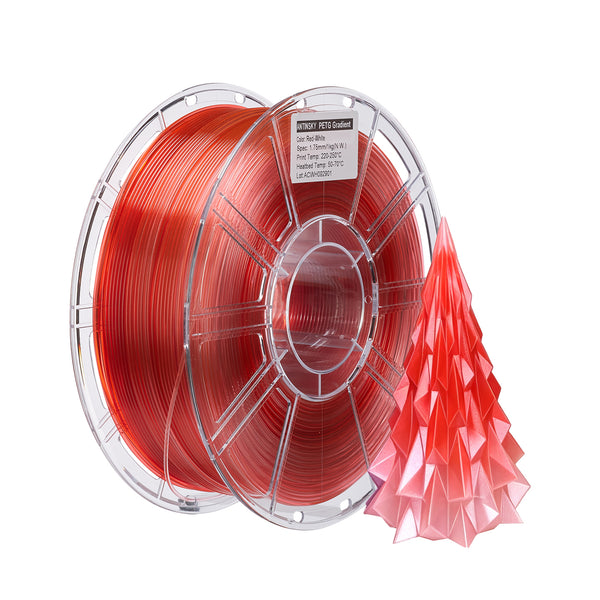
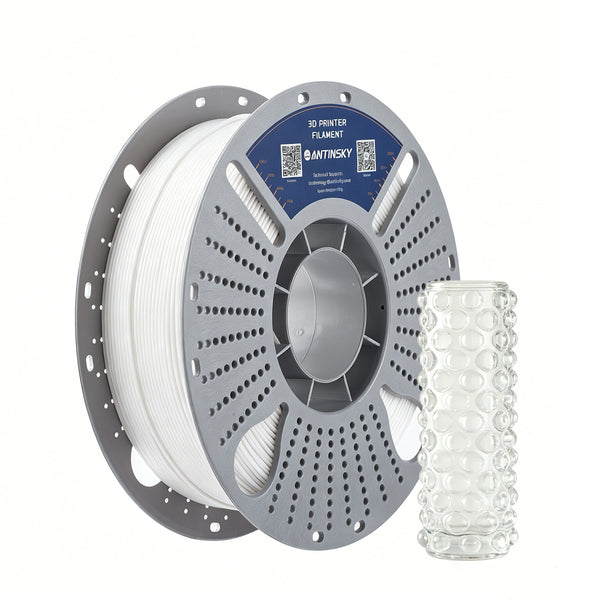
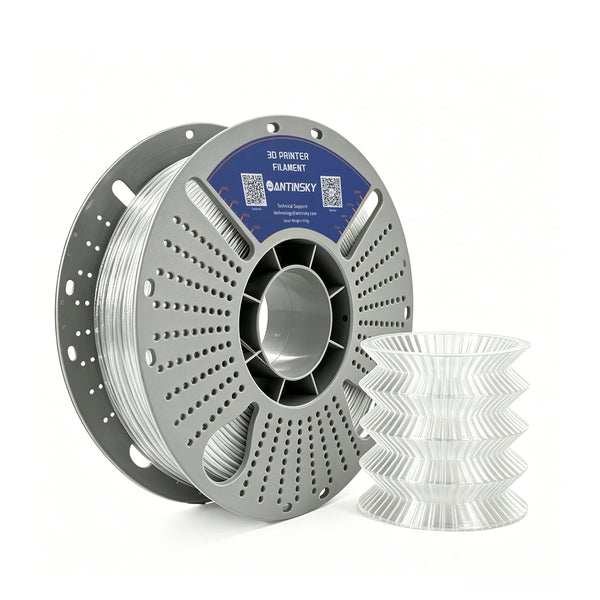
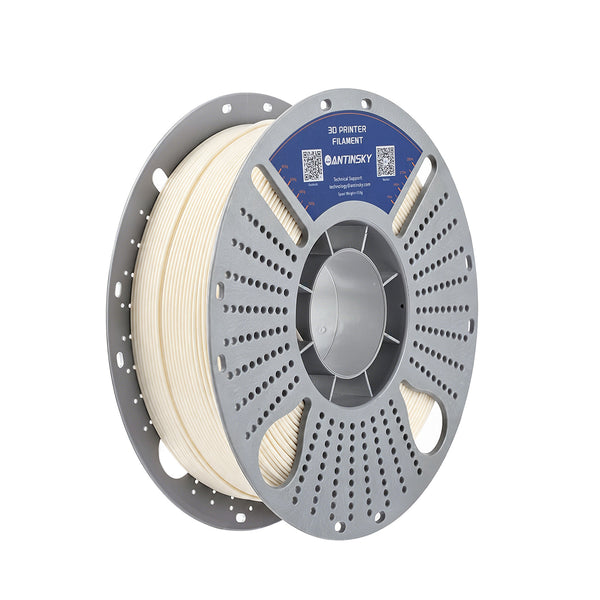
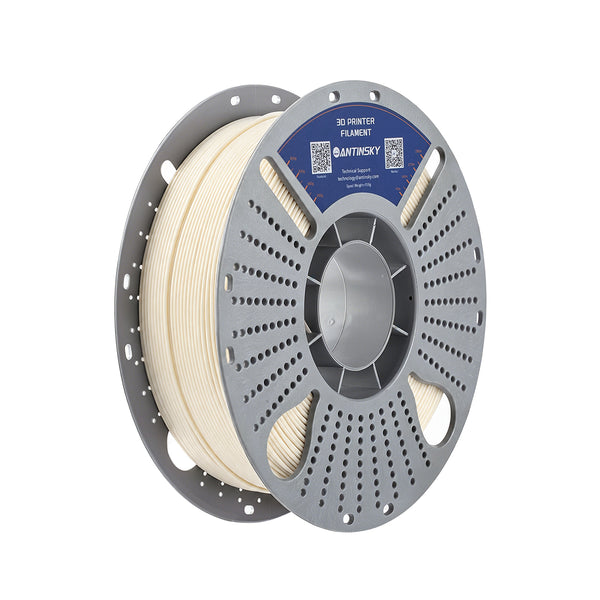














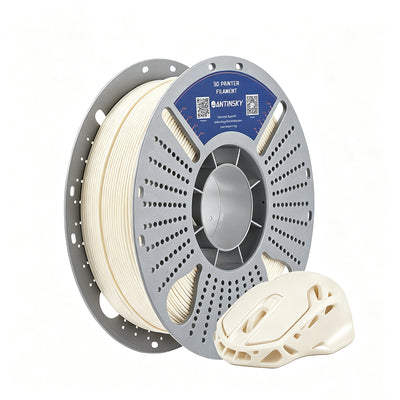
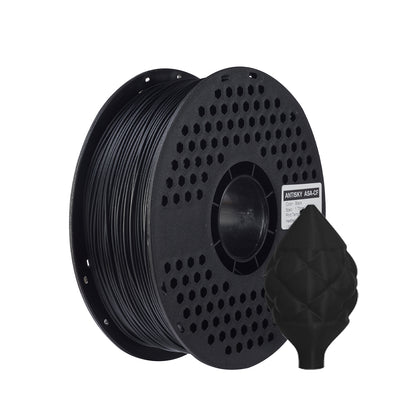
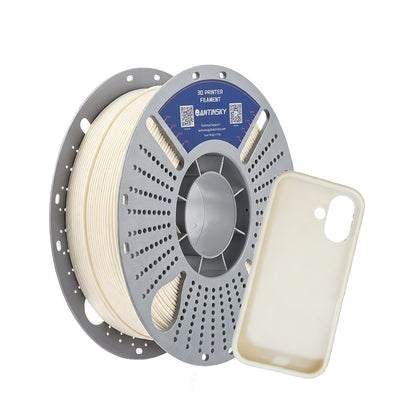
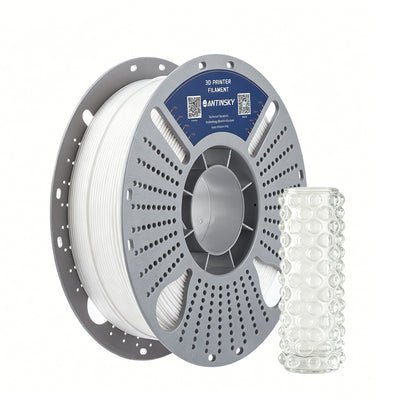
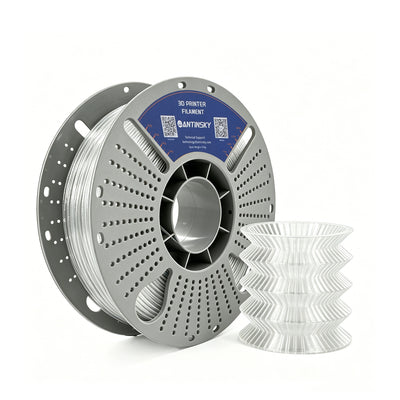
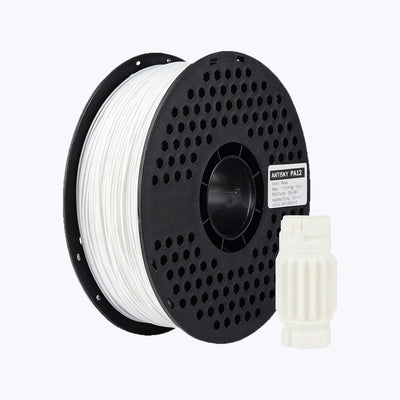
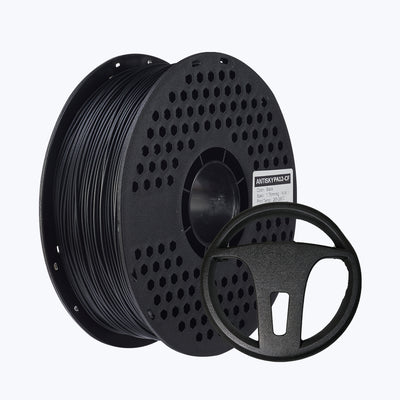
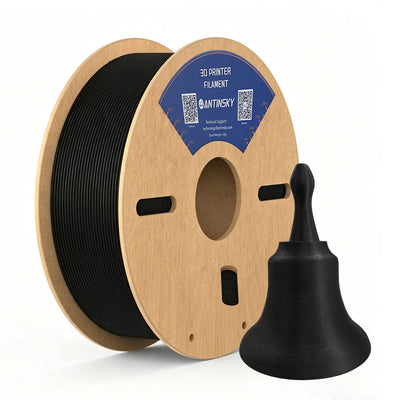
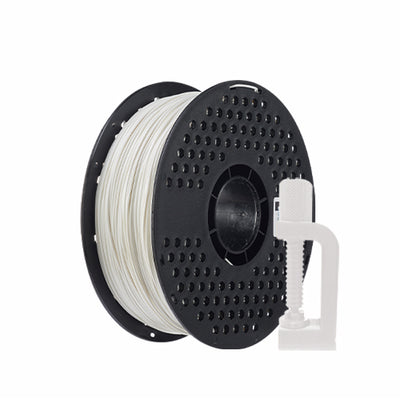
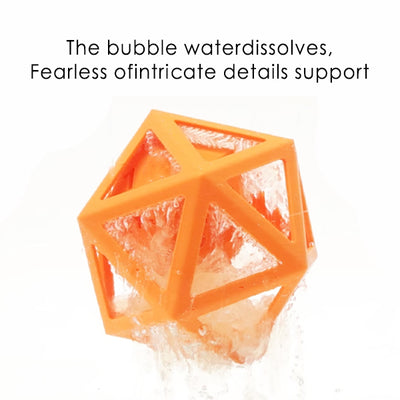




Flexible filament is where FDM printing gets genuinely interesting — and where most people waste their first spool. The problem is almost always the same: the wrong shore hardness for the job, printed with settings copied from PLA. This guide explains what the hardness numbers actually mean and how to choose between TPU 85A, 90A, 95A, high-speed TPU, and PEBA.
Shore Hardness, Explained Properly
Flexible filament is labeled with a Shore A number. Lower number = softer. It's a logarithmic-ish scale, so the gaps between grades are bigger than they look:
| Shore A | Feels like | Typical use |
|---|---|---|
| ~60A | Shoe insole / gel | Very soft grips, cushioning (hard to print) |
| 85A | Soft rubber band | Comfort parts, gaskets, wearables, seals |
| 90A | Shoe sole / tire tread | The all-rounder — wheels, pads, phone cases |
| 95A | Stiff rubber / skateboard wheel | Semi-flexible functional parts, bushings, feet |
| 98A+ / PEBA | Hard plastic with give | Springs, living hinges, high-cycle flexing |
The practical rule: soft = comfort and sealing, hard = repeated mechanical work. A soft part that has to cycle a million times will tear. A hard part used as a pad will transmit shock.
TPU 95A — Start Here
95A is the most printable flexible filament and the standard recommendation for a first spool. It's stiff enough to feed through most direct-drive extruders without drama, yet still flexes visibly under hand pressure.
ANTINSKY TPU 95A is available in 12 colors with ≥800% elongation at break — that's roughly 70× the elongation of PLA (about 11%), and it's the number that explains why TPU absorbs impacts instead of cracking.
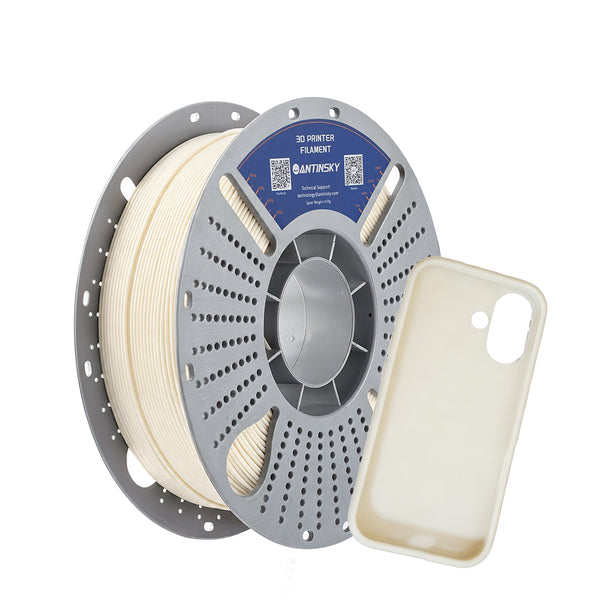
Great for: phone cases, drone landing gear, gaskets, vibration dampers, wearables, RC tires, foot pads.
TPU 90A — The Balanced Middle
90A gives noticeably more give than 95A while still printing reliably on modern machines. ANTINSKY TPU 90A offers ≥1000% elongation across 11 colors, making it the most comfortable grade for things that sit against the body or need to seal.
Great for: phone/watch straps, goggles, seals that compress, prosthetic liners, wearable medical devices, soft-touch handles.
Choose between 90A and 95A on one question: does it need to conform to something? If yes, go softer. If it needs to hold shape under load, go harder.
TPU 85A — Maximum Comfort
85A is where printing gets finicky and results get impressive. Very soft, very grippy, and very sensitive to extruder design — you want a short, well-constrained filament path.
ANTINSKY TPU 85A delivers ≥500% elongation with excellent tear, abrasion and cut resistance, plus low compression set — meaning it recovers its shape after being squashed for a long time.
Great for: insoles and orthotics, cushioning pads, soft robotic grippers, flexible couplings, gaskets that must seal under light pressure.
TPU 95A High Speed — Flexible, Without the Slowdown
Standard TPU is slow. Very slow. Most people print it at 20–30 mm/s because faster speeds cause buckling in the extruder and inconsistent extrusion.
ANTINSKY TPU 95A HS is reformulated for higher flow: in our testing, a part that took 11 h 57 min in standard TPU 95A printed in 3 h 57 min — about 3× faster — while keeping the ≥800% elongation of the standard grade.
If you print flexible parts regularly, this single change is the biggest time saving available.
TPU-LW 90A — Lightweight Foaming
Lightweight TPU foams as it prints, dropping density and letting you tune hardness by nozzle temperature: roughly 93A down to 77A as you push temperature up. At 0.9 kg per spool.
Great for: lightweight soles, padded parts, buoyant components, anything where weight matters as much as softness. See ANTINSKY TPU-LW 90A.
PEBA-98A — When Flexible Parts Must Flex Forever
TPU is elastic, but it fatigues: bend it enough times and it tears. ANTINSKY PEBA-98A is a different polymer family (polyether block amide) built specifically for repeated flex fatigue — think living hinges, spring elements, and high-cycle athletic components.
Our testing shows a ~70% rebound rate in drop-ball tests against TPU 90A, with strong compression and flex recovery. This is a premium engineering material, and it's the correct choice when a TPU part has failed you by tearing at a fold line.
Comparison Table
| Filament | Hardness | Elongation | Printability | Best application |
|---|---|---|---|---|
| TPU 95A | 95A | ≥800% | Easy | General flexible parts, cases, tires |
| TPU 90A | 90A | ≥1000% | Easy–moderate | Wearables, seals, straps |
| TPU 85A | 85A | ≥500% | Moderate–hard | Insoles, cushioning, soft grippers |
| TPU 95A HS | 95A | ≥800% | Easy (fast) | Same as 95A but ~3× faster |
| TPU-LW 90A | 93A→77A | — | Moderate | Lightweight foam, soles |
| PEBA-98A | 98A | Very high fatigue life | Moderate | Living hinges, springs, high-cycle flex |
Printing Flexible Filament: What Actually Matters
Extruder type
Direct drive is strongly preferred. With a Bowden setup, soft filament buckles in the gap between extruder and hotend. If you're on Bowden, stay at 95A and slow down.
Speed
Start at 20–30 mm/s for standard TPU, 40–60 mm/s only for HS grades on a direct-drive machine. Flexible filament needs time in the melt zone.
Retraction
Keep it tiny — 0.5–1 mm at 10–20 mm/s, or disable it. Long retractions drag the filament out of the melt zone and cause jams.
Temperature
Typically 210–235 °C nozzle, 40–60 °C bed. Too cold and layers won't bond; too hot and the filament turns to syrup in the extruder.
Flow and cooling
Reduce flow slightly (95–98%) and keep part cooling on, but not at 100% — excessive cooling hurts inter-layer bonding on flexible parts.
Spool handling
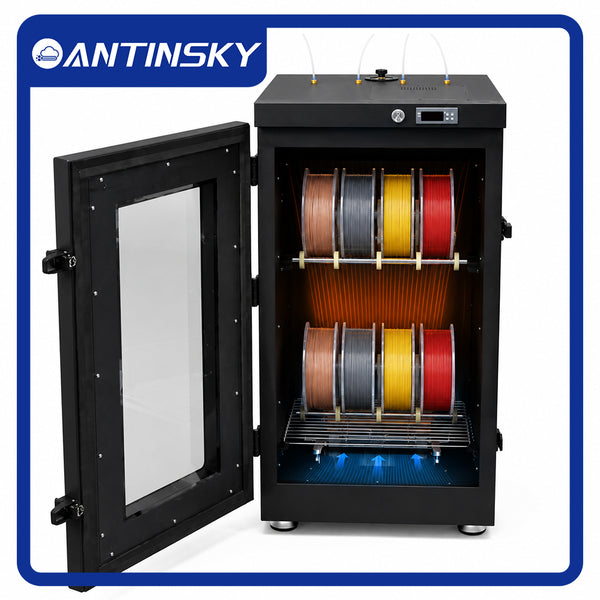
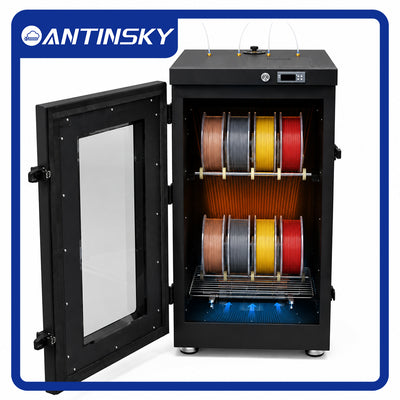
Flexible filament absorbs moisture readily. Dry it before use and store with desiccant — wet TPU prints with hissing, popping and ugly surface finish. A dry box such as the ANTINSKY FilaBox solves this permanently.
Frequently Asked Questions
What's the softest flexible filament I can print on a stock printer?
Realistically 95A on a direct-drive machine. 85A is achievable but expects tuning. Below 85A you generally want a dedicated setup.
TPU vs TPE — what's the difference?
TPU is a polyurethane elastomer, TPE is a broader family that includes TPU. In 3D printing, "TPE" usually means a softer, harder-to-print rubber. Most hobby printing is TPU.
Can I print flexible filament with a Bowden extruder?
Yes, at 95A and with slow speeds, short retraction and a well-aligned PTFE path. Soft grades will likely fail.
Why does my TPU print look stringy?
Wet filament or too much retraction. Dry the spool, then reduce retraction length.
Is flexible filament food safe?
Neither TPU nor PEBA should be assumed food-safe. Layer lines harbor bacteria regardless of material. Use food-contact-certified liners if that's required.
Which is better for phone cases, 90A or 95A?
95A for a firm snap-on case; 90A if you want it to flex and absorb drops. Many people print both and pick.
Does flexible filament work with AMS/multi-material systems?
Some multi-material systems handle 95A; softer grades usually jam. Check your system's recommendations before buying.
Final Thoughts
Pick flexible filament by the job, not by the number on the box. 95A for general use, 90A for wearables and seals, 85A for comfort and cushioning, HS grades when time matters, and PEBA when the part has to flex indefinitely without failing. Then respect the extruder and the speed limits — flexible filament is unforgiving of a rushed setup, and effortless once dialed in.
Browse them all in the ANTINSKY Filaments collection.