






















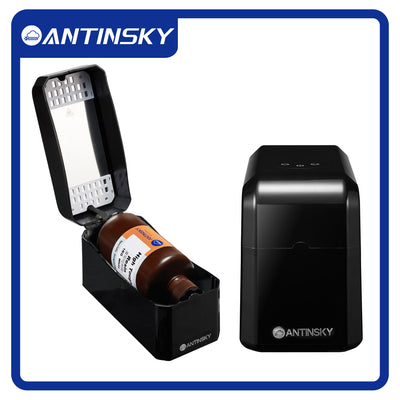


Not all 3D printer resin is created equal. Standard resin is great for miniatures and display models — but the moment your part has to survive heat, load, impact, chemicals, or fire, you need an engineering resin. This guide breaks down the six main engineering resin families, what each one is actually good at, and how to pick the right one for your application.
What Makes a Resin "Engineering Grade"?
SLA/DLP resin is a photopolymer: a mix of monomers, oligomers, photoinitiators and fillers that cures under 385–410 nm UV light. Standard resin optimizes for one thing — detail at low cost. Engineering resin trades some of that ease for measurable mechanical performance.
The properties that matter when you specify an engineering resin:
- Tensile strength — how much pull the part withstands before it fails
- Flexural modulus — stiffness. Low = rubbery, high = rigid
- Elongation at break — how far it stretches before snapping. The single best indicator of toughness
- Notched impact strength — resistance to sudden shock (J/m)
- Heat deflection temperature (HDT) — the temperature at which a loaded part starts to sag
- Shore D hardness — surface hardness and wear resistance
If a datasheet doesn't list these, you can't call it engineering grade.
The Six Engineering Resin Families at a Glance
| Resin | Tensile Strength | Elongation | Impact (J/m) | HDT | Best For |
|---|---|---|---|---|---|
| Standard Tough | ~34 MPa | High | Good | Low | Snap-fit parts, durable prototypes |
| High Tough | ~35 MPa | Very high | Very good | Low–mid | Impact housings, brackets, jigs |
| Engineering SG | High | Moderate | Good | Mid | Functional parts, tooling |
| Engineering Impact | High | Moderate | Excellent | Mid | Crash-test rigs, jigs under shock |
| High Temperature | High | Low | Moderate | High | Hot-end fixtures, molds, under-hood |
| Flame Retardant | 34.88 MPa | 7.03% | 10 J/m | 144 °C | Electrical housings, UL94 V-0 parts |
| Anti-Static | 35.66 MPa | 10.15% | 11 J/m | — | ESD-safe jigs, electronics handling |
1. Toughened Resins: Standard Tough & High Tough
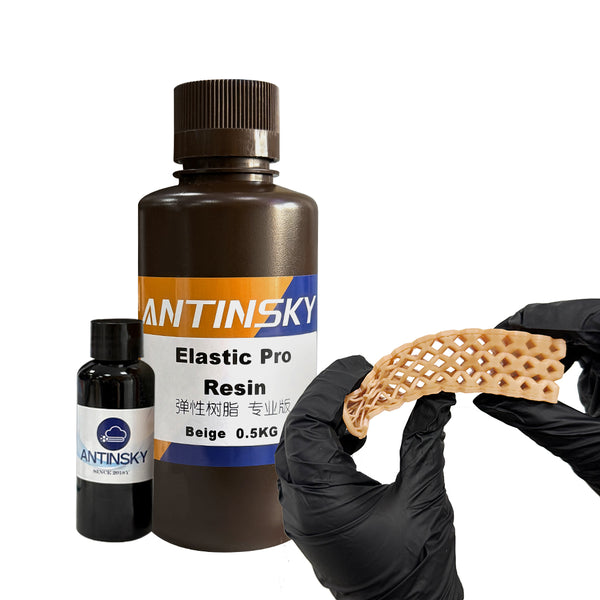
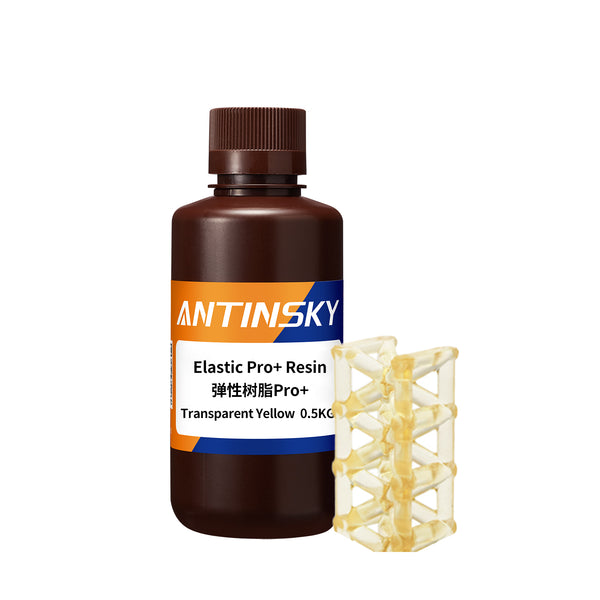
Toughness is the most common upgrade request and the cheapest one to make. These resins swap brittle crosslinkers for long-chain impact modifiers, so the part bends instead of shattering.
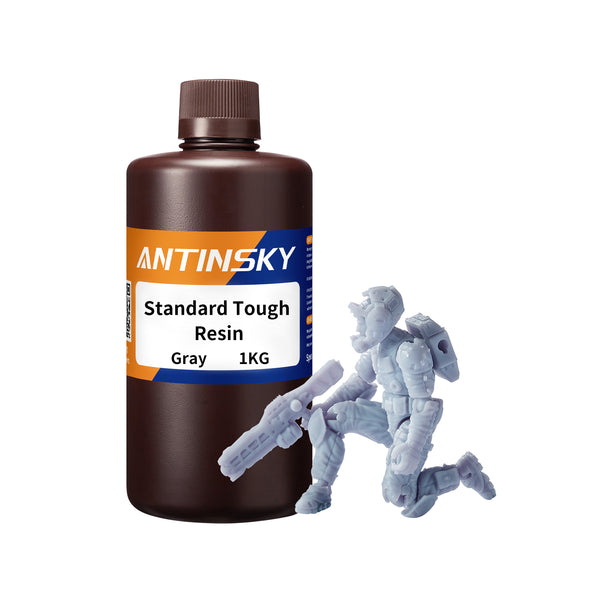
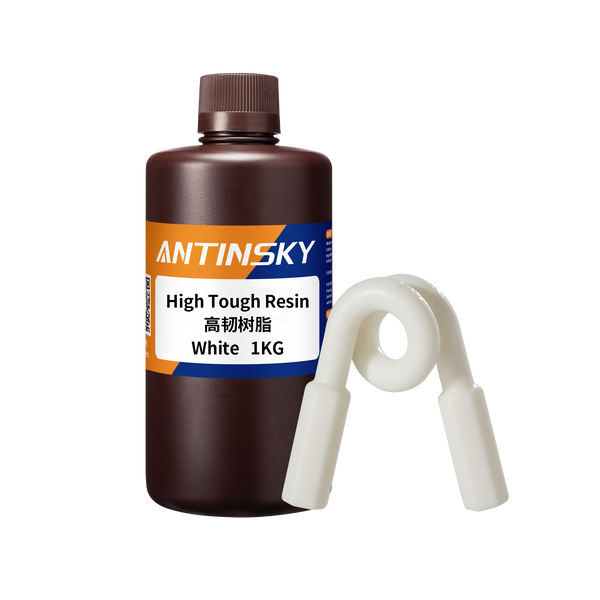
Our ANTINSKY Standard Tough Resin is the entry point: noticeably more ductile than standard resin at almost the same price, and it holds fine detail well. When you need more, ANTINSKY High Tough Resin pushes elongation and impact further — this is the resin to use for snap-fits, threaded inserts, and parts that get dropped.
Real-world use: electronics enclosures, latches, living hinges, drone arms, tool handles, anything printed with a wall thinner than 2 mm.
2. Engineering Impact Resin — For Shock Loading
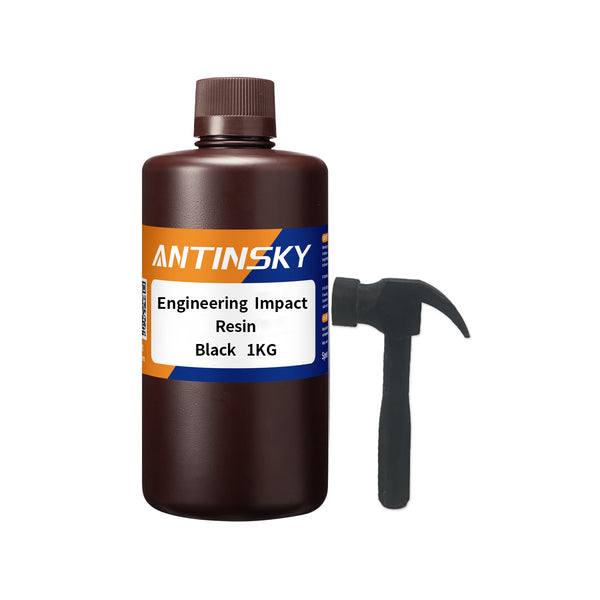
Where tough resin absorbs damage by flexing, ANTINSKY Engineering Impact Resin absorbs it by distributing the load. It has the highest impact resistance in our range, which makes it the right choice for jigs and fixtures that get hammered, drop-tested housings, and functional parts in rough service.
The trade-off versus High Tough: slightly less elongation, more stiffness. If your part breaks by *bending*, pick High Tough. If it breaks by *impact*, pick Engineering Impact.
3. Engineering SG Resin — General-Purpose Structural
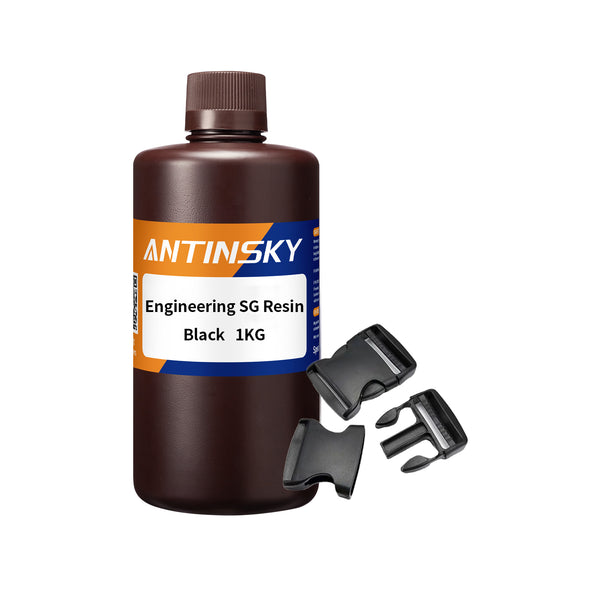
ANTINSKY Engineering SG Resin is the balanced structural option: higher modulus and strength than standard resin, with enough elongation to avoid brittleness. It holds tight tolerances and machines cleanly, so it's a popular choice for functional prototypes, tooling inserts, and parts that need to be tapped or drilled after printing.
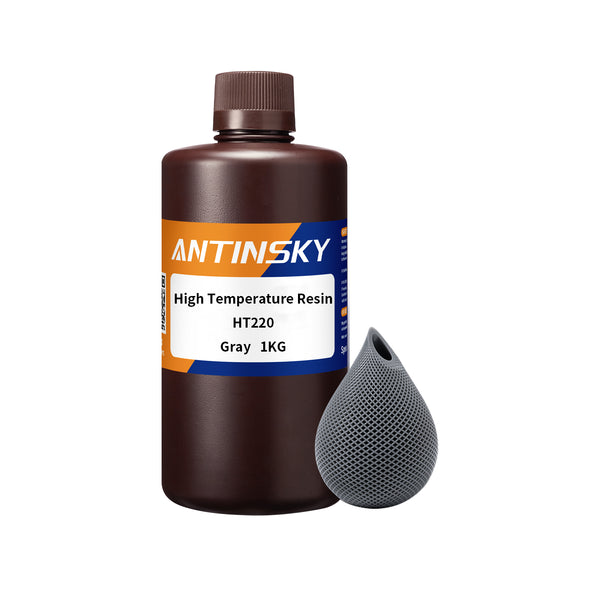
4. High Temperature Resin — Where Heat Kills Everything Else
Standard resin gets soft by 60 °C. Sit a part in a hot car, near an extruder hot-end, or under a curing lamp and it will warp. ANTINSKY High Temperature Resin is formulated for a much higher heat deflection temperature with low creep, and it's the only sensible choice for:
- Fixtures that clamp onto heated machinery
- Low-volume injection-mold inserts and mold masters
- Under-hood and near-electronics brackets
- Parts that go through a painting or powder-coat oven
Note that high-temp resins are stiffer and less forgiving on fine detail than tough resins — a good post-cure is mandatory.
5. Flame Retardant Resin — UL94 V-0 Certified
If your part is anywhere near mains voltage, a battery pack, or a public-space electrical installation, you may be legally required to use a flame-retardant material. ANTINSKY Flame Retardant Resin carries a UL94 V-0 rating — the strictest of the three UL94 horizontal/vertical burn ratings — meaning it self-extinguishes within 10 seconds with no flaming drips.
Our measured data (Shenzhen Yongchanghe TDS):
| Tensile strength | 34.88 ±10% MPa |
| Tensile modulus | 516.33 ±10% MPa |
| Elongation at break | 7.03 ±10% |
| Flexural strength | 56.9 ±10% MPa |
| Flexural modulus | 1617.94 ±10% MPa |
| Notched impact | 10 ±10% J/m |
| Shore D hardness | 83–86 |
| Heat deflection temperature | 144 °C |
| Flammability | UL94 V-0 |
That 144 °C HDT paired with a V-0 rating is a rare combination — most flame-retardant photopolymers fall apart well below 100 °C.
6. Anti-Static (ESD) Resin — Protecting What You Print For
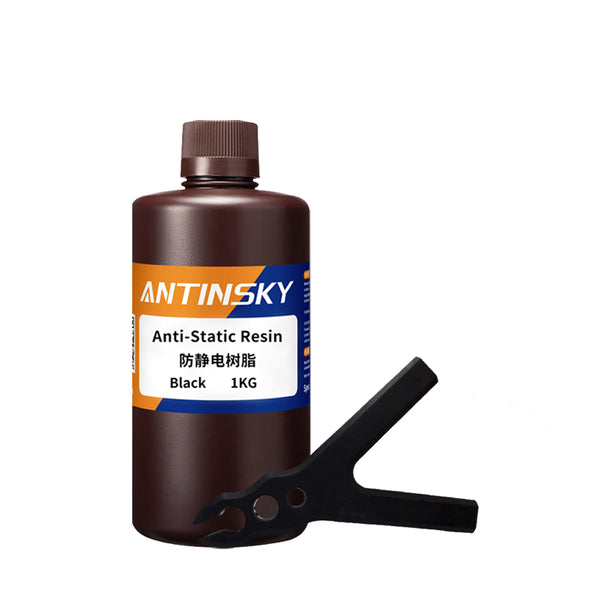
Some parts don't just need to survive, they need to not damage something else. Electrostatic discharge is a real killer of sensitive electronics, and it's why production floors use ESD-safe tooling. ANTINSKY Anti-Static Resin is formulated for controlled surface resistivity (tested to ANSI/ESD S11.11 or IEC 61340), so jigs, trays, and handling fixtures bleed off charge instead of storing it.
Key specs: tensile 35.66 MPa, flexural 46.33 MPa, Shore D 81–85, notched impact 11 J/m. When you specify a part for ESD service, define the required surface resistivity range up front — the resin's performance is measured on a test plaque of at least 100 × 100 mm, and part geometry affects the result.
How to Choose: A Decision Path
- Is the part near heat above 80 °C? → High Temperature Resin
- Must it pass a flammability standard? → Flame Retardant Resin (UL94 V-0)
- Does it touch unprotected electronics? → Anti-Static Resin
- Does it get hit, dropped, or shocked? → Engineering Impact Resin
- Does it bend, snap, or thread? → High Tough or Standard Tough Resin
- None of the above, but it must be stiff and accurate? → Engineering SG Resin
Printing & Post-Processing Engineering Resin
Engineering resins are less forgiving than standard resin. A few rules that save prints:
- Exposure: start 10–20% longer than standard resin for bottom layers; engineering formulations are often more UV-opaque.
- Wash thoroughly: residual uncured resin acts as a plasticizer and will quietly reduce your measured strength. Two-bath washing beats one dirty bath. See ANTINSKY Resin Deterge.
- Post-cure properly: toughness and HDT both depend on full conversion. Use a chamber with even 405 nm coverage such as the ANTMEGA Cure, and cure submerged in water to exclude oxygen.
- Respect wall thickness: thin walls under 0.8 mm rarely reach the datasheet numbers.
- Orientation matters: SLA parts are anisotropic. Print load-bearing features so layers run perpendicular to the main stress.
Frequently Asked Questions
Can I mix engineering resin with standard resin?
Physically you can, chemically it's unpredictable — you lose the datasheet properties and get an unknown blend. Don't do it for functional parts.
Which engineering resin is strongest?
"Strongest" depends on the load. For tensile and stiffness, High Temperature and Engineering SG lead. For impact, Engineering Impact. For elongation, High Tough.
Is flame-retardant resin also heat resistant?
In our case yes — 144 °C HDT alongside UL94 V-0, which is unusual. Verify against your product's own TDS and certifying body.
Do engineering resins work on any MSLA printer?
Any 385–410 nm LCD/DLP printer works, but expect longer exposure. Recommended print environment: 25–30 °C at ~50% RH, light intensity 3500–4500 µW/cm².
Why did my tough resin part still crack?
Almost always under-cure or contamination. Check that the part is fully cured through its thickest section, and that washing removed all uncured resin from internal cavities.
How long can I store engineering resin?
Sealed, out of sunlight, at 25–30 °C: about 2 years. Pigmented and filled resins settle, so stir before use.
Final Thoughts
Engineering resin isn't one product — it's a toolbox. Match the failure mode you're designing against (heat, fire, static, shock, flex, or stiffness) to the family that solves it, then respect the print and post-process settings. Get those two things right and a $30 bottle of resin will outperform a machined prototype in the applications it was designed for.
Browse the full range at the ANTINSKY Engineering Resin collection.