




















Nylon, PETG, and ABS are the three filaments people reach for when PLA is not strong enough, not heat-resistant enough, or not tough enough. They overlap in the middle — all three are tougher than PLA, all three print hotter, and all three can handle functional parts — but they diverge sharply on moisture, warping, chemical resistance, and cost. Choosing the wrong one is the difference between a part that lasts for years and a part that fails on the first hot afternoon.
This guide compares them head to head, then maps the differences onto real applications so you can pick the right material the first time.
The Short Answer
| If you need... | Choose | Why |
|---|---|---|
| Maximum toughness, abrasion resistance, low friction | Nylon (PA12) | Best impact and wear resistance of the three |
| Chemical resistance, water tightness, easy printing | PETG | Very low warp, handles moisture better than nylon |
| Heat resistance and stiffness on a budget | ABS | Higher glass transition, cheap, easy to post-process |
| Stiff structural parts | PA12-CF / ABS-CF | Carbon fiber raises stiffness and reduces warp |
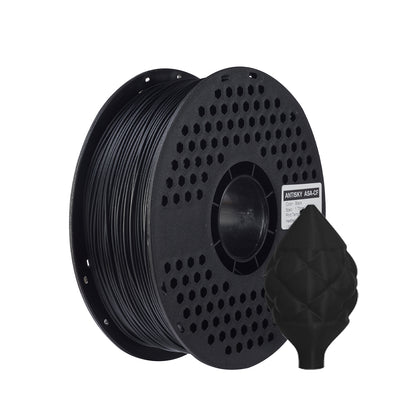
| Outdoor / UV exposure | ASA | UV-stable cousin of ABS |
Head-to-Head Comparison
| Property | Nylon (PA12) | PETG | ABS |
|---|---|---|---|
| Print temperature | 250-270 °C | 230-250 °C | 240-260 °C |
| Bed temperature | 70-90 °C | 70-85 °C | 95-110 °C |
| Enclosure needed | Recommended | No | Strongly recommended |
| Toughness / impact | Excellent | Good | Good |
| Stiffness | Medium | Medium | Medium-high |
| Heat resistance (HDT) | ~80-100 °C | ~70-75 °C | ~95-105 °C |
| Moisture sensitivity | Very high | Low-medium | Low |
| Warping | High (unless CF-filled) | Low | High |
| Layer adhesion | Excellent | Excellent | Good |
| Fumes / odor | Low | Low | Noticeable, needs ventilation |
| Abrasive (needs hardened nozzle) | CF grades yes | No | CF grades yes |
| Cost | Higher | Low | Low |
| Best for | Gears, hinges, living hinges, tools | Brackets, enclosures, water-tight parts | Automotive, hot environments, painted parts |
Nylon (PA12): The Toughness King
Nylon is the material you choose when the part has to survive abuse. It has outstanding impact resistance, excellent abrasion resistance, and a naturally slippery surface that makes it ideal for sliding components, gears, and wear parts. Living hinges printed in nylon can flex thousands of times without cracking. For mechanical parts that see real loads, few desktop materials match it.
The catch is moisture. Nylon absorbs water from the air aggressively, and wet filament causes popping, steam bubbles, weak layer adhesion, and a rough surface. It also means nylon must be dried before almost every print and printed from a dry box. Once printed, nylon continues to absorb moisture, which slightly changes its dimensions over time — a real consideration for precision fits.
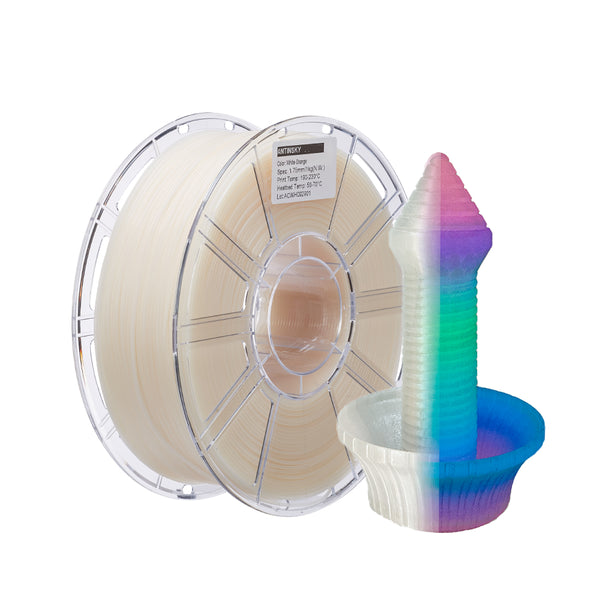
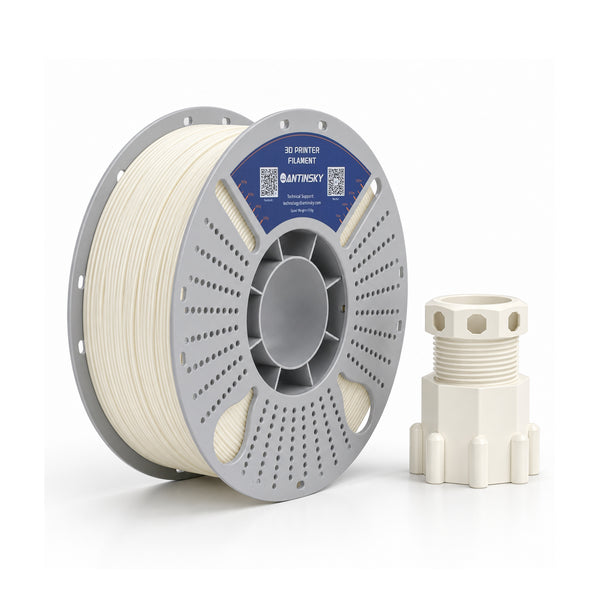
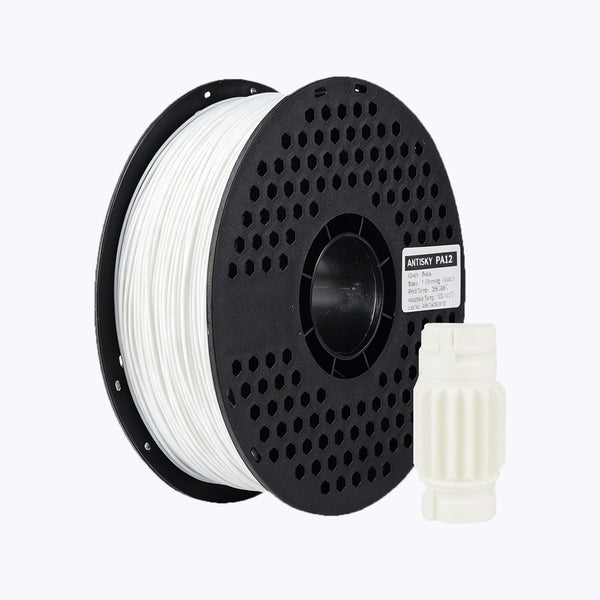
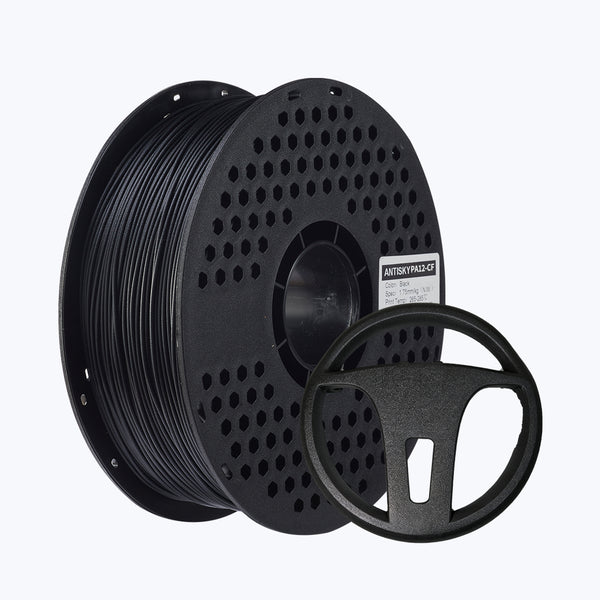
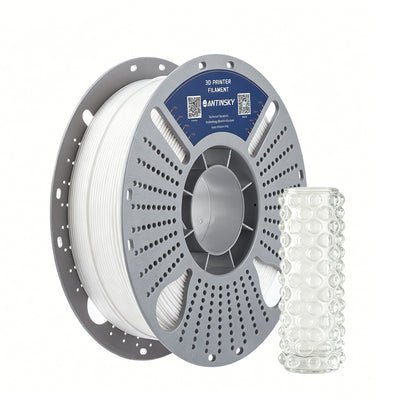
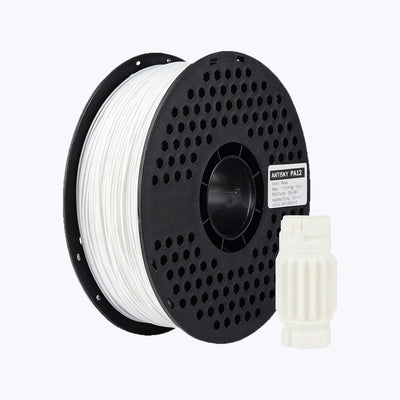
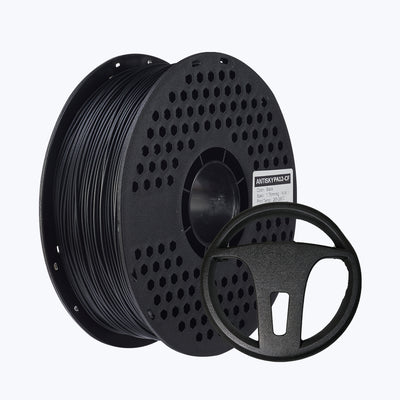
Nylon also warps if it cools unevenly, so an enclosure and a hot bed help. The easiest fix is carbon-fiber-filled nylon such as ANTINSKY PA12-CF 3D Filament: the fibers raise stiffness, reduce warping, and add dimensional stability, at the cost of some impact toughness and the need for a hardened nozzle. Plain ANTINSKY PA12 3D Filament remains the choice when maximum toughness and flexibility matter more than stiffness.
Nylon printing tips
- Dry at 70-80 °C for 6-12 hours before printing, and print from a dry box.
- Use an enclosure and a bed at 70-90 °C to fight warping; a glue stick or PEI sheet helps adhesion.
- Print slower than PLA — hot and slow improves layer bonding.
- Use a hardened steel or tungsten nozzle for CF grades.
PETG: The Balanced All-Rounder
PETG is the easiest of the three to live with. It bonds well between layers, warps very little, resists chemicals and water, and produces water-tight parts — which makes it the default for functional prints that are not going to sit in a hot car. It is also forgiving for beginners because it needs no enclosure and tolerates imperfect settings.
Its weaknesses are heat resistance and stiffness. PETG softens around 70-75 °C, so a part left on a hot dashboard or near a heater can deform. It is also prone to stringing and to over-adhesion on smooth beds, so you need a release agent or a textured sheet to avoid ripping the surface. Compared with nylon it is less tough, and compared with ABS it is less heat resistant — but it is the best all-round compromise and the cheapest to get right.
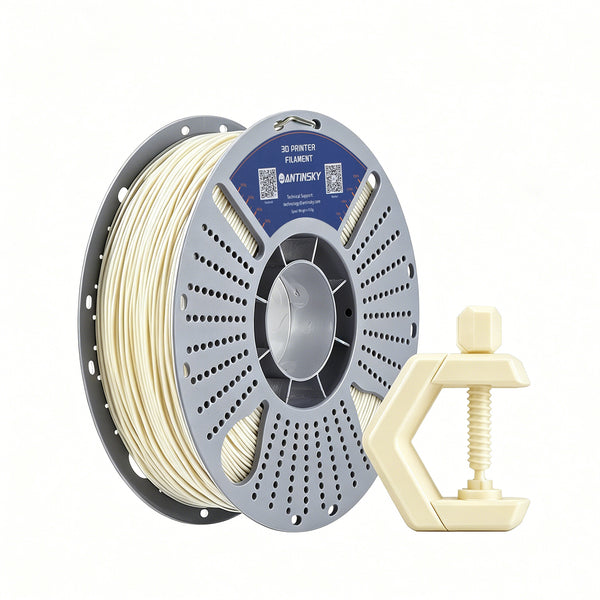
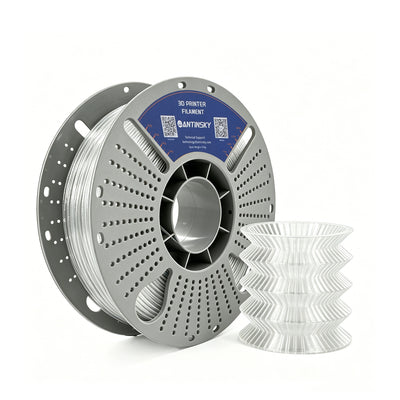
ANTINSKY PETG 3D Filament prints at moderate temperatures with excellent layer adhesion, making it a strong pick for brackets, enclosures, jigs, and anything that touches water or mild chemicals. If you are upgrading from PLA and want one filament that does most jobs, PETG is usually the correct answer.
PETG printing tips
- Bed 70-85 °C, nozzle 230-250 °C; start lower and raise temperature to reduce stringing.
- Use a textured PEI plate or a light release agent — PETG grips smooth surfaces hard.
- Keep part-cooling moderate; too little cooling causes sagging, too much hurts layer bonding.
- Dry it if it has been open for weeks, though it tolerates moisture far better than nylon.
ABS: Heat Resistance and Post-Processing
ABS is the traditional engineering filament. It handles heat better than PETG, is stiffer, and can be smoothed to a glossy finish with acetone vapor — something neither nylon nor PETG can match. It is also cheap and widely available, and it is the base for many flame-retardant and weather-resistant variants.
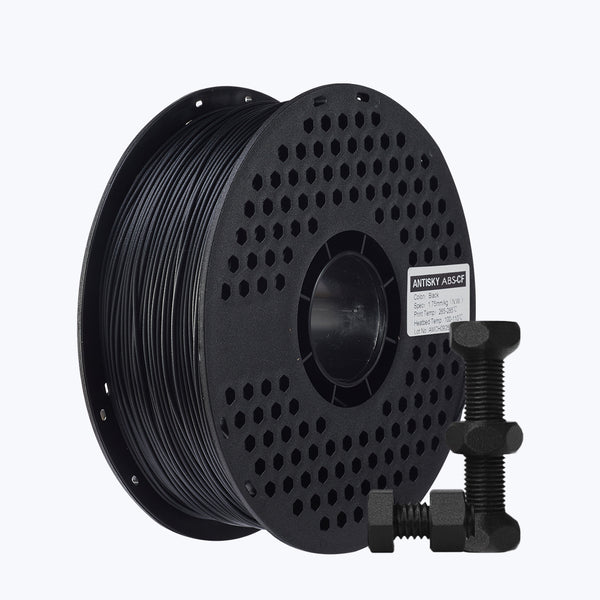
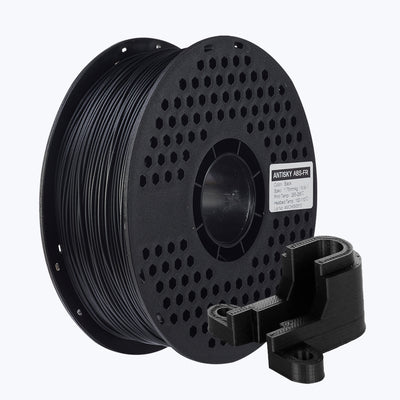
The downside is printing behavior. ABS warps strongly and splits along layer lines if it cools too fast, so an enclosure is close to mandatory. It releases styrene fumes that require ventilation. On the plus side, once dialed in, ABS is predictable, and it accepts machining, drilling, tapping, and painting well. ANTINSKY ABS 3D Filament delivers the classic ABS properties, while ANTINSKY ABS+ 3D Filament improves layer adhesion and reduces warping for noticeably easier printing.
ABS printing tips
- Enclose the printer; keep the chamber warm and avoid drafts.
- Bed 95-110 °C with an adhesion aid such as ABS slurry or a PEI sheet.
- Ventilate the room — styrene fumes are the main reason ABS gets a bad reputation.
- For outdoor parts, use ASA instead; it is UV-stable where ABS is not.
Print Settings Cheat Sheet
| Setting | Nylon (PA12) | PETG | ABS |
|---|---|---|---|
| Nozzle temp | 250-270 °C | 230-250 °C | 240-260 °C |
| Bed temp | 70-90 °C | 70-85 °C | 95-110 °C |
| Part cooling fan | Low / off | Moderate | Low |
| Enclosure | Recommended | Optional | Required for large parts |
| Bed adhesion | PEI + glue | Textured PEI / release agent | PEI + slurry |
| Nozzle material | Hardened for CF grades | Brass is fine | Hardened for CF grades |
Drying: Where the Three Diverge Most
Moisture handling is the single biggest practical difference between these materials, and it is the reason two identical prints can look completely different on different days.
| Material | Moisture Risk | Drying Temp / Time | Storage |
|---|---|---|---|
| Nylon (PA12) | Very high | 70-80 °C, 6-12 h | Dry box, desiccant, always |
| PETG | Low-medium | 60-65 °C, 4-6 h | Sealed bag with desiccant |
| ABS | Low | 65-70 °C, 4 h if needed | Sealed bag with desiccant |
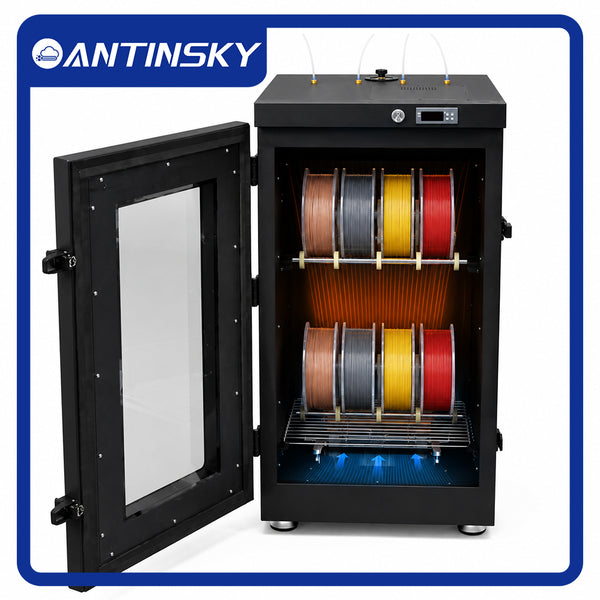
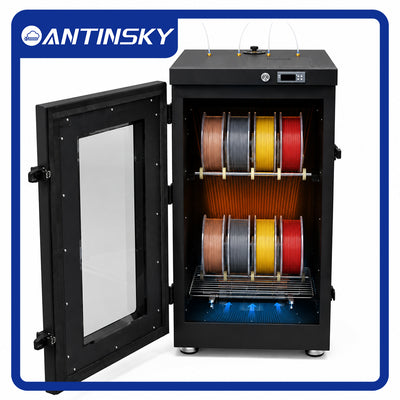
A dedicated drier such as the ANTINSKY FDC12 Filament Dryer Cabinet removes the guesswork, and a dry box lets you print nylon directly from a low-humidity environment. For nylon in a humid climate, this is not optional equipment — it is the difference between working parts and stringy, brittle failures.
Which Material for Which Job?
| Application | Best Choice | Reason |
|---|---|---|
| Gears, cams, sliding parts | Nylon / PA12 | Wear resistance and low friction |
| Living hinges, clips, snap fits | Nylon | Excellent fatigue resistance |
| Water-tight containers | PETG | Good layer bonding, easy to seal |
| Brackets, mounts, jigs | PETG or ABS+ | Strong, cheap, easy to print |
| Hot environments (no UV) | ABS | Higher heat deflection temperature |
| Under-hood / automotive | ABS-CF or ASA | Heat plus stiffness or UV stability |
| Precision structural parts | PA12-CF | Stiff, stable, low warp |
Real-World Scenarios: How the Choice Plays Out
Specifications only get you so far. The value of these three materials becomes obvious when you attach them to a concrete part.
Scenario 1 — A drone arm that takes hard landings
The failure mode here is impact, not heat. Nylon flexes and absorbs energy where ABS would crack, and PETG would deform permanently. A carbon-fiber nylon such as PA12-CF adds the stiffness needed to stop the arm fluttering in flight while keeping most of nylon's toughness. The trade-off is a hardened nozzle and disciplined drying.
Scenario 2 — A pump housing that must not leak
Water tightness depends on layer bonding and dimensional stability, and PETG delivers both without an enclosure. Nylon would work but absorbs water and swells over time, loosening critical fits. ABS is prone to micro-gaps between layers if the chamber cools unevenly. PETG is the low-risk answer.
Scenario 3 — A bracket inside an engine bay
Heat is the enemy, and PETG softens long before the part is stressed. ABS handles the temperature and is stiff enough for a mount, while ABS-CF or ASA adds stiffness or UV stability if the part also sees sunlight. This is the classic case where ABS or the more forgiving ABS+ earns its keep.
Scenario 4 — A gear that runs thousands of cycles
Wear and friction dominate, and nylon's slick, abrasion-resistant surface outlasts both alternatives. For a slow, loaded gear, plain PA12 is the better choice than a CF grade, because the fibers make the surface more abrasive against its own mating gear.
Cost, Effort, and Total Ownership
The spool price is only part of the story. Count the hidden costs before you commit:
| Factor | Nylon (PA12) | PETG | ABS |
|---|---|---|---|
| Spool cost | Highest | Lowest | Low |
| Drying equipment | Effectively required | Helpful | Occasional |
| Enclosure | Recommended | Not needed | Recommended |
| Nozzle wear | High for CF grades | None | High for CF grades |
| Failure cost | High (ruined prints, warping) | Low | Medium |
| Post-processing options | Limited | Limited | Acetone smoothing, painting |
PETG is the cheapest material to get right because it demands the least equipment and fails the least often. Nylon costs the most to run well, but nothing else matches its toughness. ABS sits in the middle: cheap on the spool, but it rewards you for owning an enclosure and ventilating properly.
Choosing by Machine and Climate
Your hardware and your environment shape the answer as much as the application does.
- Open-frame printer, no enclosure: stick to PETG. ABS and nylon will fight you unless the parts are small and the room is warm and still.
- Enclosed printer: all three are on the table; nylon still wants a dry box, and ABS still wants ventilation.
- Humid climate: treat drying as a core skill. PETG tolerates it, ABS shrugs it off, and nylon demands an active dry box and pre-print drying every time.
- Dry, cold climate: nylon becomes far easier, though you still dry it; ABS still benefits from an enclosure for large parts.
Whichever direction you go, buy one grade at a time and dial it in before stocking up. A single spool printed twenty times teaches you more than five spools printed once.
Frequently Asked Questions
Is nylon better than PETG for strong parts?
For impact, wear, and fatigue, nylon wins. For stiffness, water tightness, and easy printing, PETG is often the more practical choice. Neither is universally stronger — the right answer depends on whether the load is impact, abrasion, or steady stress.
Which of the three is easiest to print?
PETG by a wide margin. It needs no enclosure, tolerates moisture, and warps very little. ABS and nylon both benefit from an enclosure, and nylon demands active drying.
Can I print ABS without an enclosure?
Small parts sometimes succeed, but large or tall parts will usually warp and split. An enclosure keeps the chamber warm and uniform, which is the single biggest improvement you can make for ABS.
Do nylon and ABS require a hardened nozzle?
Plain grades do not, but carbon-fiber-filled versions of both do. The fibers are abrasive and will wear a brass nozzle quickly, changing extrusion width and ruining consistency.
Is PETG food safe?
The base material is generally regarded as safe, but FDM prints have layer lines that trap bacteria, and colorants vary. Treat printed parts as not food-safe unless the filament is explicitly certified and the part is treated appropriately.
Why does my nylon print feel wet or bubble?
Those are classic signs of absorbed moisture flashing into steam at the nozzle. Dry the filament at 70-80 °C for several hours and print from a dry box to eliminate it.
Bottom Line
Pick by the dominant failure mode of the part, not by reputation. If it must survive impact and abrasion, choose nylon — plain PA12 for toughness or PA12-CF for stiff, stable engineering parts. If it must be easy, water-tight, and reliable, choose PETG. If it must resist heat and take paint or acetone smoothing, choose ABS or the easier-printing ABS+. Whichever you pick, remember that drying and enclosure control matter more than the label on the spool.